KUKI NATIONAL ORGANISATION
GOVERNMENT OF ZALE’N-GAM
Ref No: 03-12/09 Dated Manmasi, 23rd March 2009
PRESS COMMUNIQUE
As the Kuki Students’ Organisation, Delhi commemorated the 2nd Anniversary of the first ever “Kuki Students’ Up-Rising” on 23rd March. The Kuki National Organisation send its solemn salute to all the students organizations namely HSAD (Hmar), KZPD (Simte), ZSPD (Zou), SSPP (Paite), Zillai (Vaiphei), DMZD (Mizo), KRSUD (Komrem), SINLUNG, SIPHRO, NSUD (Naga), Ao Students Union, NSUI, DUSU, JNUSU, ABVP, DFI, AISA, NSF etc. who demonstrated their solidarity towards the cause and sufferings of the Kukis. And especially to those 154 ‘brave’ students who were dumped inside the infamous Tihar Jail.
On this historic day, the 23rd March, 2007, more than 800 Kuki Students in Delhi & NCR along with other philanthropic students’ organization surrendered their career, time and pure blood to dissent the legacy of the British Imperialist towards the Kukis propagated by the Manipur and Central Government of India. On this fateful day, 154 Kuki Students, including innocent or juvenile, were expedite to Tihar Jail at the cost of raping, torturing, maiming and what not against the Kukis in Manipur.
The terrorist-United National Liberation Front raped more than 20 Hmar-Kuki women at Parbung, Churachandpur District, Manipur. Besides maiming many Kukis by planting landmines and IEDs, they abducted more than 700 innocent Kukis from Chandel District, Manipur, including aged, infant and pregnant women in collaboration with Military Junta of Myanmar on the fateful night of 13th March, 2007. Both the parties held high integrity among their ranks by raping, maiming and abducting the innocent Kukis. Such indecent and barbarous act of the terrorist-UNLF and Military Junta of Myanmar against the Kukis provoke the heart of young and committed Kuki Students in and around the national capital of India on 23rd March, 2007. The students who marched towards the Indian parliament to highlight the plights of the Kukis were meted with defamatory words, molesting ladies, lathi charging, water cannoning, stone throwing, and tear gassing and even firing from service arms by the Delhi Police and RAF.
Despite negligence and non-co-operation from the police forces, the state as well as the central government on their charter of demands, the Kuki Students never lose their mind but rather face the brutalities of the government forces to save the image of the Kukis.
Therefore, as the pen is mightier than sword the KNO took this privilege to honour and sincerely appeal to our students to be the vanguard of the Kuki society and play more pro-active role in ameliorating the pathetic present day Kuki nation.
Sd/-
Lenin H Kuki
Secretary Information & Publicity
Kuki National Organisation
MANMASI
Mar 24, 2009

Mar 22, 2009
At Parliament Street; Battle for the people of Chandel
"THE KSOD SALUTES ALL THE BRAVE HEARTS ON THE 3RD ANNIVERSARY OF THE MEGA RALLY,WITHOUT THEM TODAY WE WIIL NOT STAND WHERE WE ARE".HURRAY!!
By Luntinsat
New Delhi: 23rd March, 2009
It was a fine day and the Kuki Students’ Organisation, Delhi (KSOD) was waiting for an acceptable assurance from both the Manipur state and the center governments, to the body’s earlier demands during March 5, 2007-rally. The demands were; (1) to sanitize all the landmines planted in Chandel district by the Meitei insurgent group - United National Liberation Front (UNLF) since 2001, (2) to flash the UNLF out of Chandel district, (3) to give compensation to the landmine victims, (4) to set up permanent army out posts at strategic locations prone to attack by UNLF, etc.
Before the dilatory governments could take any positive measure to address the above demands, the UNLF took over 400 Kukis at Ts Laijang refugee camp into hostage to Lallim, a Kuki village situated near Indo-Burma border on the Burmese territory. These Kukis had earlier fled their homesteads due to heavy armed conflict between Indian army and the UNLF in their areas, and so were camped at Ts Laijang. The news of abduction, which spread like wild fire provoked the entire Kuki community – young and old, man and women, intellectuals and the ordinary alike. This abduction, it seemed, was an act of vengeance by the UNLF for the 5th March rally. It was these compound humiliations of the Kuki nation that led to another demonstration.
Members of the KSOD with all its fraternal student organizations belonging to Kom, Hmar, Paite, Simte, Vaiphei, Mizo and Zou tribes joined by Naga students and others was busy preparing for the second protest rally at Jantar Mantar – Parliament Street on 23rd March 2007. Each of the five buses arranged for transportation began moving into its assigned localities, colonies, residential areas, quarters, apartments, picked up students and then headed towards Jantar Mantar. The first and the last buses reached the site at 12:30 pm and 01:30 pm respectively. At 2:30 pm all preparation for the rally was finished.
The street of Jantar Mantar including the pavement had already been thronged with large crowd of other marginalized people, who were also dissatisfied with the government over one or the other issue. They included Action 2007 led by famous anti-dam activist, Medha Patkar demanding clean water for the Bhopalis who have not been getting clean water since 1984 when the Union Carbide, a fertilizer factory caught fire and has, as consequence, contaminated soil and water body of the region. Also were there Adivasis/tribals from the south and central India demanding for land right.
Queuing up in two long lines each made up of about 250 students, slogans – ‘Rescue immediately--400 Kukis,’ ‘UNLF--Down, down,’ ‘Ibobi Singh--Down, down…’ etc - were chanted in rehearsal for a while and then the march followed. In the front are two giant banners that read - We Demand Immediate Relief and Justice for Kukis Distressed by the Atrocities of United National Liberation Front (UNLF).
The volunteers were watchfully active in rendering best of their assigned job i.e.. to look after the smooth flow of the procession. The traffic and pedestrians trying to intercept the queue were first humbly requested not to do so, and those who stubbornly did not pay heed to the soft request were given zero tolerance; they were forcefully pushed back. Some even got thrashed at the height of nationalist sentiment.
Scorching heat of the sun heightened the agitated resentment further. Demolishing the first barricade, preparations were on for breaking the second barricade and for stand off with the police and Rapid Action Force (RAF) that was inevitably waiting. As wheeled barricade units from the first demolition were arranged along the street length, command to strike the second barricade was waited. To counter the police batons, iron bars were obtained by dismantling the steel structures of barricade units.
Students began to violently shake or kick the steel structures to which act the IPS officer on duty sternly objected. The police personnel on duty looked sad and disconcerted too as they appeared to have perceived the inevitable scuffle. Even as the officer tried to calm the agitation, the police personnel had got set and were just waiting for the order to strike. Seeing the development, some of us approached the officer and requested him not to begin using brute force. We also assured him that the demonstration would end peacefully if the authority had the will to listen to our demand. The police were momentarily placated without which the clash might have started much earlier.
In the meantime, Mr. Thangboi, the general secretary of KSOD was going to the PM’s Office to enquire about the progress of the proposed direct talks with PM to brief about landmines in Chandel district and the abduction of 400 Kukis by UNLF. Soon, the KSOD secretary informed the KSOD president by mobile phone: Nothing sort of the expected talk is likely, so storm the second and third barricades, and march towards the Parliament House to hold the protest in front of it. Accordingly, the second barricade was pulled down. The RAF and the police pushing from the other side were unable to poise the stronger force of our boys. Only the third and last barricade was left now. Violence began at this third attempt when the police started canning, bombarding tear gas, detonating stun bombs, etc, to disperse us.
The tear gas momentarily blinded us, and this forced those of us in the vanguard to retreat few yards back until we regained our normal sight by applying toothpaste in the affected eyes. The girl students fought no less a fight when they supplied fist sized stones to pelt at the armed police who were firing at us non-stop. Unable to withstand the multiple flying stones hitting at them, the police had no option but to retreat into their station. Now, by shouting ‘li li li li li li ….. ha ha ha ha ha ha …..’, the momentary victory was celebrated on the battlefield-street shrouded in tear gas. Meanwhile, a pressman mounted on a height was shooting the scene. But in all of a sudden, a flying stone hit him that he immediately wrapped up his instruments and ran for his safety.
It must have been, as logically perceived, that the retreating police personnel while being inside their station received order from their superior to immediately move out for do-or-die attack at us. Even as they came out again, we resisted them in the fiercest manner so that they had to retreat for the second time. We now, for a while, have become too confident in our strength and might that the Delhi police and RAF would not stand before us. What an infuriating insult it must have been for armed to the teeth police!
After about 5 minute of their second retreat, in all of a sudden, an RAF man happen to ran into our midst. Our boys contended for the first touch at him which only few lucky ones had due to space congestion. Like a rolling football in a neck and neck match during the extra time within the penalty court, the plundered RAF man was not visible. Only our boys could be seen jumping. To be fair, this constable deserves the Highest Award of Honour for Bravery.
Seeing this from their station gate, the police and the RAF rushed, in hundreds, towards us. Their attack indicated 'do or die' determination. But, before they could reach us, we had advised the girls to escape the scene, and we followed the same suit a little after them. Hundreds of students fleeing and the police chasing after them caused traffic jam at the Parliament Street. Students who took the other streets were not pursued while those turned right and fled towards Jantar Mantar where we parked our buses were hotly pursued. Those who quickly boarded the buses were also bombarded with tear gas, beaten up and then taken to the custody. Of course, some of the good physique ones managed to escape.
In and around Connough Place, the police thronged the streets looking for any northeast looking face. Two young Nepali lovers enjoying their good evening at Mc Donald restaurant were also hauled up, and were detained until proved innocence. Buses, Auto rickshaws and taxies were stopped and checked, and suspected northeasterners were randomly arrested. KSOD Miss Fresher 2005, Hoineilhing who tried to evade the police by boarding a DTC bus was pulled down and arrested in such operation. A mobile phone call from her said, ‘U Sat, eiman tauve.’ (brother Sat, I ‘ve been arrested). I was still hiding behind a car at a garage of MTNL head office along with two other friends. We got there because some minutes before when the police van chased us.
One of the girls with me at the time was so frightened at the news that she instantly became pale and lost her consciousness. She was a heart patient. We brought her back to normalcy by massaging. As luck would have it, we saw a policeman who could not find us going back. It was 5:30 pm and the office hour was over. An MTNL officer who came to take his car for home noticed us. We requested him to give us a lift. He agreed and dropped us at India Gate from where we headed for our respective home by auto-rickshaw.
Out of 148 detained, the number of students arrested during the clash at Parliament Street is estimated to be at most ten while the rest were those picked up in the aftermath of the incident from in and around C.P. and in the RML hospital. Those arrested in the hospital were either injured persons there to get treatment or the visiting friends taking foodstuffs for the injured. There were also some who surrendered themselves because their girlfriends or boyfriends had already been arrested. A Bollywood scene came into play in the lives of nationalism awakened Kuki youngsters.
As promise, when the jailed students could not be bailed out on the second day, a silent protest was organized on 25.5.07 at ITO, an area close to the offices of most of the Indian national papers. This time, many student union from the mainland India including JNU Student Union extended their solidarity and support. Condemning the police brutality and the callousness of the UPA government, everyone called for the immediate release of the detained students. After about four hour long protest, the gathering dispersed when the police assured for release in the same evening. It required the same number of people with valid identity card to bail out the jailed students; one person for each imprisoned student.
Since the verification could not be completed during the day’s working hour, it was left for the next day, and that meant another tormented night in jail. Meanwhile, expectation had it that food was prepared for some 500 people at JNU campus where a welcome ceremony was to be hosted. When it was learnt nothing sort of such welcome ceremony would take place, people gathered dispersed at 12:00 pm. Finally, this plan succeeded in the next late evening. Both the valley and hill MP’s attended the ceremony. An ex-MP, Pu Holkhomang and our lawyer, Sandeep were also present. The programme was moderated by David Buhril, the assistant editor of the North East Sun magazine. It was a moment of joy and relief.
To most of the jailed students, experience in Tihar Jail was a memorable incident of life. Few boys walked out of the Jail with their famous love notes or poems composed during the three day detention. For one like Esther, a research scholar at JNU, having Medha Patker, leader of Narmada Bachao Andolon (NBA), as inmate boosted her morale. Mention may be made that in reel life, though highly educated Kuki women seem to uphold and preach gender equality, in real life situation, they dare not face the challenge as their male counterparts do. A good number of girls feel that what is normal for boys might not be so with the girls. “To cite a good example,” a girl added, “I might not feel shame to be in jail if I were a boy”.
When the cases against the bailed out students were kept pending in the court for over a year, rumours of inefficient leadership in the KSO began to spread. Some felt neglected as they thought the sacrifice for the national cause was not reciprocated befittingly. Others blamed the lackadaisical approach for the pending. A student, who does not want to be named said, “that was the last event for me to contribute my time and energy for the nation,” and added, “in future, how can I obey the leaders who would not care for me?” There is another suggestion that in future, any move of such sort should be given a detailed deliberation and discussion, and the same should clearly be informed to the all students beforehand.
Whatever, our sacrifice for the Kuki nation did not go vain. The abducted Kukis of Chandel had been rescued. At the same time, God of ages has through wisdom in our leaders worked wonders and all the cases of bailed out students have been heard and closed in our favour in 2008. This display of valour shall remain impressing down our history. Long live KSOD.
By Luntinsat
New Delhi: 23rd March, 2009
It was a fine day and the Kuki Students’ Organisation, Delhi (KSOD) was waiting for an acceptable assurance from both the Manipur state and the center governments, to the body’s earlier demands during March 5, 2007-rally. The demands were; (1) to sanitize all the landmines planted in Chandel district by the Meitei insurgent group - United National Liberation Front (UNLF) since 2001, (2) to flash the UNLF out of Chandel district, (3) to give compensation to the landmine victims, (4) to set up permanent army out posts at strategic locations prone to attack by UNLF, etc.
Before the dilatory governments could take any positive measure to address the above demands, the UNLF took over 400 Kukis at Ts Laijang refugee camp into hostage to Lallim, a Kuki village situated near Indo-Burma border on the Burmese territory. These Kukis had earlier fled their homesteads due to heavy armed conflict between Indian army and the UNLF in their areas, and so were camped at Ts Laijang. The news of abduction, which spread like wild fire provoked the entire Kuki community – young and old, man and women, intellectuals and the ordinary alike. This abduction, it seemed, was an act of vengeance by the UNLF for the 5th March rally. It was these compound humiliations of the Kuki nation that led to another demonstration.
Members of the KSOD with all its fraternal student organizations belonging to Kom, Hmar, Paite, Simte, Vaiphei, Mizo and Zou tribes joined by Naga students and others was busy preparing for the second protest rally at Jantar Mantar – Parliament Street on 23rd March 2007. Each of the five buses arranged for transportation began moving into its assigned localities, colonies, residential areas, quarters, apartments, picked up students and then headed towards Jantar Mantar. The first and the last buses reached the site at 12:30 pm and 01:30 pm respectively. At 2:30 pm all preparation for the rally was finished.
The street of Jantar Mantar including the pavement had already been thronged with large crowd of other marginalized people, who were also dissatisfied with the government over one or the other issue. They included Action 2007 led by famous anti-dam activist, Medha Patkar demanding clean water for the Bhopalis who have not been getting clean water since 1984 when the Union Carbide, a fertilizer factory caught fire and has, as consequence, contaminated soil and water body of the region. Also were there Adivasis/tribals from the south and central India demanding for land right.
Queuing up in two long lines each made up of about 250 students, slogans – ‘Rescue immediately--400 Kukis,’ ‘UNLF--Down, down,’ ‘Ibobi Singh--Down, down…’ etc - were chanted in rehearsal for a while and then the march followed. In the front are two giant banners that read - We Demand Immediate Relief and Justice for Kukis Distressed by the Atrocities of United National Liberation Front (UNLF).
The volunteers were watchfully active in rendering best of their assigned job i.e.. to look after the smooth flow of the procession. The traffic and pedestrians trying to intercept the queue were first humbly requested not to do so, and those who stubbornly did not pay heed to the soft request were given zero tolerance; they were forcefully pushed back. Some even got thrashed at the height of nationalist sentiment.
Scorching heat of the sun heightened the agitated resentment further. Demolishing the first barricade, preparations were on for breaking the second barricade and for stand off with the police and Rapid Action Force (RAF) that was inevitably waiting. As wheeled barricade units from the first demolition were arranged along the street length, command to strike the second barricade was waited. To counter the police batons, iron bars were obtained by dismantling the steel structures of barricade units.
Students began to violently shake or kick the steel structures to which act the IPS officer on duty sternly objected. The police personnel on duty looked sad and disconcerted too as they appeared to have perceived the inevitable scuffle. Even as the officer tried to calm the agitation, the police personnel had got set and were just waiting for the order to strike. Seeing the development, some of us approached the officer and requested him not to begin using brute force. We also assured him that the demonstration would end peacefully if the authority had the will to listen to our demand. The police were momentarily placated without which the clash might have started much earlier.
In the meantime, Mr. Thangboi, the general secretary of KSOD was going to the PM’s Office to enquire about the progress of the proposed direct talks with PM to brief about landmines in Chandel district and the abduction of 400 Kukis by UNLF. Soon, the KSOD secretary informed the KSOD president by mobile phone: Nothing sort of the expected talk is likely, so storm the second and third barricades, and march towards the Parliament House to hold the protest in front of it. Accordingly, the second barricade was pulled down. The RAF and the police pushing from the other side were unable to poise the stronger force of our boys. Only the third and last barricade was left now. Violence began at this third attempt when the police started canning, bombarding tear gas, detonating stun bombs, etc, to disperse us.
The tear gas momentarily blinded us, and this forced those of us in the vanguard to retreat few yards back until we regained our normal sight by applying toothpaste in the affected eyes. The girl students fought no less a fight when they supplied fist sized stones to pelt at the armed police who were firing at us non-stop. Unable to withstand the multiple flying stones hitting at them, the police had no option but to retreat into their station. Now, by shouting ‘li li li li li li ….. ha ha ha ha ha ha …..’, the momentary victory was celebrated on the battlefield-street shrouded in tear gas. Meanwhile, a pressman mounted on a height was shooting the scene. But in all of a sudden, a flying stone hit him that he immediately wrapped up his instruments and ran for his safety.
It must have been, as logically perceived, that the retreating police personnel while being inside their station received order from their superior to immediately move out for do-or-die attack at us. Even as they came out again, we resisted them in the fiercest manner so that they had to retreat for the second time. We now, for a while, have become too confident in our strength and might that the Delhi police and RAF would not stand before us. What an infuriating insult it must have been for armed to the teeth police!
After about 5 minute of their second retreat, in all of a sudden, an RAF man happen to ran into our midst. Our boys contended for the first touch at him which only few lucky ones had due to space congestion. Like a rolling football in a neck and neck match during the extra time within the penalty court, the plundered RAF man was not visible. Only our boys could be seen jumping. To be fair, this constable deserves the Highest Award of Honour for Bravery.
Seeing this from their station gate, the police and the RAF rushed, in hundreds, towards us. Their attack indicated 'do or die' determination. But, before they could reach us, we had advised the girls to escape the scene, and we followed the same suit a little after them. Hundreds of students fleeing and the police chasing after them caused traffic jam at the Parliament Street. Students who took the other streets were not pursued while those turned right and fled towards Jantar Mantar where we parked our buses were hotly pursued. Those who quickly boarded the buses were also bombarded with tear gas, beaten up and then taken to the custody. Of course, some of the good physique ones managed to escape.
In and around Connough Place, the police thronged the streets looking for any northeast looking face. Two young Nepali lovers enjoying their good evening at Mc Donald restaurant were also hauled up, and were detained until proved innocence. Buses, Auto rickshaws and taxies were stopped and checked, and suspected northeasterners were randomly arrested. KSOD Miss Fresher 2005, Hoineilhing who tried to evade the police by boarding a DTC bus was pulled down and arrested in such operation. A mobile phone call from her said, ‘U Sat, eiman tauve.’ (brother Sat, I ‘ve been arrested). I was still hiding behind a car at a garage of MTNL head office along with two other friends. We got there because some minutes before when the police van chased us.
One of the girls with me at the time was so frightened at the news that she instantly became pale and lost her consciousness. She was a heart patient. We brought her back to normalcy by massaging. As luck would have it, we saw a policeman who could not find us going back. It was 5:30 pm and the office hour was over. An MTNL officer who came to take his car for home noticed us. We requested him to give us a lift. He agreed and dropped us at India Gate from where we headed for our respective home by auto-rickshaw.
Out of 148 detained, the number of students arrested during the clash at Parliament Street is estimated to be at most ten while the rest were those picked up in the aftermath of the incident from in and around C.P. and in the RML hospital. Those arrested in the hospital were either injured persons there to get treatment or the visiting friends taking foodstuffs for the injured. There were also some who surrendered themselves because their girlfriends or boyfriends had already been arrested. A Bollywood scene came into play in the lives of nationalism awakened Kuki youngsters.
As promise, when the jailed students could not be bailed out on the second day, a silent protest was organized on 25.5.07 at ITO, an area close to the offices of most of the Indian national papers. This time, many student union from the mainland India including JNU Student Union extended their solidarity and support. Condemning the police brutality and the callousness of the UPA government, everyone called for the immediate release of the detained students. After about four hour long protest, the gathering dispersed when the police assured for release in the same evening. It required the same number of people with valid identity card to bail out the jailed students; one person for each imprisoned student.
Since the verification could not be completed during the day’s working hour, it was left for the next day, and that meant another tormented night in jail. Meanwhile, expectation had it that food was prepared for some 500 people at JNU campus where a welcome ceremony was to be hosted. When it was learnt nothing sort of such welcome ceremony would take place, people gathered dispersed at 12:00 pm. Finally, this plan succeeded in the next late evening. Both the valley and hill MP’s attended the ceremony. An ex-MP, Pu Holkhomang and our lawyer, Sandeep were also present. The programme was moderated by David Buhril, the assistant editor of the North East Sun magazine. It was a moment of joy and relief.
To most of the jailed students, experience in Tihar Jail was a memorable incident of life. Few boys walked out of the Jail with their famous love notes or poems composed during the three day detention. For one like Esther, a research scholar at JNU, having Medha Patker, leader of Narmada Bachao Andolon (NBA), as inmate boosted her morale. Mention may be made that in reel life, though highly educated Kuki women seem to uphold and preach gender equality, in real life situation, they dare not face the challenge as their male counterparts do. A good number of girls feel that what is normal for boys might not be so with the girls. “To cite a good example,” a girl added, “I might not feel shame to be in jail if I were a boy”.
When the cases against the bailed out students were kept pending in the court for over a year, rumours of inefficient leadership in the KSO began to spread. Some felt neglected as they thought the sacrifice for the national cause was not reciprocated befittingly. Others blamed the lackadaisical approach for the pending. A student, who does not want to be named said, “that was the last event for me to contribute my time and energy for the nation,” and added, “in future, how can I obey the leaders who would not care for me?” There is another suggestion that in future, any move of such sort should be given a detailed deliberation and discussion, and the same should clearly be informed to the all students beforehand.
Whatever, our sacrifice for the Kuki nation did not go vain. The abducted Kukis of Chandel had been rescued. At the same time, God of ages has through wisdom in our leaders worked wonders and all the cases of bailed out students have been heard and closed in our favour in 2008. This display of valour shall remain impressing down our history. Long live KSOD.
Feb 18, 2009
Ethnic Synergy
Tongkhohao Khongsai,Former Editor,CHENNAGAM
Manipur gam hi 1891 kum chun British khutnoi ah ahung um pan in, ahi’nla phaicham kivaipohna chu Manipur Darbar ana pehdoh vang un, thinglhang gam chu amaho vaipohna noi ah ana koi uvin ahi. Kivaipohna phatah le kituptah a achelhah theina ding in Manipur thinglhang gam jouse chu sub-division ni in ana khen uvin, khat chu North-east atiu vin, chule anina chu South-east ana hisah uvin ahi. North-east in ahop chu Ukhrul gamkai se le Mao-Maram changei ana hi’n, chule South-east chun Tamenglong le Churachandpur gamkai ana hop in ahi.
Hiche phadlai chun transport & communication ana hoi po’n, thinglhang gam jouse a kituptah a vaipoh ding ana hahsat jeh chun 1833 kum chun J.C. Higgins (chulai a British Political Agent) in sub-division khat ana sembe’n Sadar ana sah in ahi. Sadar chu Urdu pao ahi’n, headquarter tina ahi. Hiche Sadar sub-division in ahop chu phai (Imphal) a pat nikhat a lhunnathei thinglhang gam jouse chu anahi. Manipur chu Indian Union a lahlud ahung hi phad in chulai a Chief Commissioner Hemat Singh in 1951 kum chun Sadar sub-division headquarter di’n Kangpokpi ana hisah tai.
1947 kum a India in zalenna ahin mu chun Northeastern Region a um nam tamtah, pao le chondan kibanglouho hi Kol-le-vaiho’n a zalennau lahpeh a achung uva aning-anop uva avaihomkhum diu venna in Indian Parliament in Bordoloi Commission ana phutdoh in, hiche Commission Recommendation dungjui chun 1952 chun Special Provision for Assam State ti’n Sixth Schedule for the Protection of Tribals passed ana bol tauve.
Assam gamsung a Mizo(Lushai), Garo, Khasi & Jaintia, North Cachar le Mikir Hills ho’n hiche provision chu ana dei jeh un Autonomous District Council ahin nei tauve. Ahi’nla chulai a Assam gam a Tribal dangho – Naga Hills, Manipur Hills, Bodo, etc kitiho’n hiche Council chu ana dei pouve.
India in zalenna amu nung kum 23 gei in Manipur chu Union Territory noi ah aum zing nalai e. 1970 vel a pat chun Manipur Political Parties ho’n state pilhing muna di’n kiphinna ahin nei zing tau vin ahileh Indian Govt. in zong Manipur UT dinmun chu dopshang a State pilhing a koi ding lunggel ahin nei ta’n ahi. Langkhat ah thinglhang gam a political leaderho’n zong thinglhang mite kivaipohna ding in District Council, Autonomy Power ahin del uvin ahi.
Ministry of Home Affairs in zong Manipur statehood peh masang ngei a agamsung 87% tobang a cheng 35% thinglhang miho dinmun suhtub masat ngai a ahed jeh in, 1971 chun Autonomous District Council Act noi ah Manipur thinglhang gam chu sub-division 6 – Manipur North, Manipur South, Manipur East, Manipur West, Tengnoupal le Sadar Hills in ahin homkhen tau vin ahi. 1972 chun Manipur in statehood ahin mu ta’n, chutoh kilhon chun sub-division 6 chu Sadar sub-division tailou adangse revenue district khat cheh ahung hi tauve.
Vangsed umtah le suhmilthei-hawilou khat chu North District semtoh ding tohgon aumlai chun government vaipoho chun Kangpokpi hi north district headquarter ding a propose ana bol masatpenu ahi. Ahi’nla chulai a Kuki haosaho chun khonung ding ana muphahlou jeh un government in gam alahna ding munho chu compensation ana thum uvin ahi. Aban in Saparmeina ding in propose ana bol kit un, compensation duchadna jeh mama’n ana hithei kit tapoi. Chuphad in Nagate’n “gam compensation thum pou ving e, chule inn sahna ding in zong kithopiu ving e” tia ana thum jeh un Govt. in north district headquarter chu Senapati ana hisah tau vin ahi.
Sub-division jouse revenue district ahung hi uva, asung a chengho’n aphatchompi danu i hin mudoh phad un, Sadar sub-division zong revenue district a semdoh ding tupna’n i hung kithahpat uvin kum 36 nung in zong muphah in aum hihlai e. Aphad laitah a thil akibol lou leh khonung a semphat ahahsat dan kihilna ding a simmun phatah ahije. Phad chesa koukit theilou hita zong leh lunglhadai louva, tunia nampi’n ipi angaichad a, pan iti lahkhom a chule ahunglhung ding phadho le boinaho iti kimaitopi ding ham ti ngaito pum a mit-hah keova i um diu akiphamo tai.
Manipur govt. in nuno cha bang a ei bol jeh un, 1990 kumbul lam a pat chun Manipur thinglhang gam a Sixth Schedule umsah tei ding tupna in district tin a kon in lamkaiho’n state level in Sixth Schedule Demand Committee, Manipur ahin phutdoh tau vin ahi. Hiche hung kiphudoh lona pentah chu ahileh North Eastern India Reorganisation Act, 1972 dungjui a 1973 kum a Manipur thinglhang gam district council 6 (north, south, east, west, Tengnoupal le Sadar sub-division) sung a MDC election masapen ana um chu MDC term 2 kichai nung a Manipur govt. in District Council thaneina ana suhbei jeh ahi.
Sixth Schedule hi dei umlheh zong leh aphatmona chu Nagate toh thuneina i hung kichu diu ahi. Meijinlung Kamson in MP ahilai chun Manipur a Sixth Schedule hi Council khatbou bol ding in Centre ah memorandum ana pe’n ahi. Chule Chief Minister Rishang Keishing in Prof. Gangumei Commission ana phutdoh in District Council 4 le Regional Council 2 semdoh ding in Ministry of Home Affairs ah State Govt. recommendation ana bol kit in ahi.
Sixth Schedule kimu leh Sixth Schedule Provision noi a thinglhang gam vettup hung hi ding, State le Central Fund council khut a hung lud ding, old age pension le Indira Awaaz Yojana noi a vaichaho inn sahpehna ding zong sum kimu ding ti i hed jeh uva i dei-u ahije. Ahi’nla hiche jouse sang a gamcheng a phajo ding chu Gamtum (Zalengam/Kukiland) i nei diu hi ahi. Vannoi a hi Kukite’n gam khatbeh i nei diu hi poimo ahi’n, hichena ding a chu alen-aneo, ahao-avai, houlamkai le politician jouse’n bidoi mun khat i nei diu angai tai. Mi noi a i sod um behseh tah jeh uva eima kivaipohna (self-government) le chamlhat nop ding dan i geldoh theilouvu ahitai. Ihmut a kon khah phad ahitai.
British le France kidou khohlai chun Britishte’n ipu-ipateu chu kidouna mun a podpo a sol ding in thupeh ana nei un ahileh ana noplou jeh un Kuki Rising 1917-19 (Kuki War of Independence) anaso lo’n ahi. Britishte toh ina kidou jeh un hesoh-gentheina seijoulou – kiel le chah, nat le sat, thi le man, inn le lou tamtah suhmang in ana um in, kho 86 halmang in ana um in ahi.
Hichangei a ipu-ipateu vin chamlhat deina jeh a kum 3 gal anadou uva chule World War – II a INA toh zalen galsadna a pan ana lahkhomnau chu 1947 kum a India in chamlhat ahin mu phad in Kukite panlahna chu lekhabu neocha a zong jihlud in aum po’n ahi. Ahi’nla imacha hilou 1857 kum a Kol sepai phabep in meichang (cartridge) a vohthao/bongthao kinu thamnomlou jeh a ana kiphinnau chu India chamlhat gal khat in asim un, loupitah in abol un ahi. Chule gulpi hou milong numei Gaidinliu in gulpi neh ding a British sepai phabep ana tha chu Prof. Gangumei Kamei in joulenaal a India chamlhat galsat dan a asut leh mithupitah asohdoh ta’n ahi. Eiho thusim vang semthu panglouva adih mongmong ahi’n, khatvei leh thudih chu hung goljou tei ding ahi.
Politics lam a mit-hah masa Nagate chun Laijang khopi District Headquarters chu Tamenglong ah achonlud un, Phaisat chu 1960 in Rishang Keishing MP ahilai chun Phungyar in akhel in, Chahsat District Headquarters chu Ukhrul ah achonlud in, Chahsat zong chu Kamzong in akhel tai.
Tengnoupal District Headquarter chu 1974 kum in Chief Minister Rishang Keishing le H.T. Thungam in Chandel mun ah ana chonlud lhon in, Kukiho le (old) Kukiho chu akivetda teina diu vin ana khen uvin, Chandel District in aminvo kit uvin ahi. Hiche jouva pat chun Chandel District sung a (old) Kukiho chu Tangkhul-Nagaho’n atilse uvin, joulenal in akinepsah un, meipum toh suto’n Naga ana pomsah uvin, Kuki le Kuki eina kidousah un ahi. Chuche bep hilou vin Lamka lang a sopi phabep lah a zong muchi phalou ana tu uvin, ‘Kuki ka hi pouve’ ti’n thuso ana bolsah uvin ahi.
Hiche kahlah a chun NSCN(IM)ho’n mi 900 val ei that kit un, 40000 tobang chenna-gena neilou vin mi liim bel in i um un ahi. Hitobang tah a Nampi dinmun alhahniem pedtah chun, mi tamtah in Kuki kiti ding jeng zong jachadna’n anagel uvin, tamtah in ana jamsan uvin ahi. Ahi’nla nampi dinmun hi alhaniem e, tia donlouva jamsan jeng lou lamkai tomngai phabep tompan jal in amangthah deh poi.
Mi’n Kuki a kiloikhomna adalhah a namdang abel leh datmo ding ahipoi. Tulai hi mi’n kihinsona ding le phatchomna dia ahad le aboltheithei abel mong ahi. October 4, 1957 chun Russiate’n Rocket masapen Sputnik-I, leised velkol ding a ana kapdoh lai chun Indiate chu ‘Khaini iti kibol leh tui ding ham’ ti bou ngaito nalai ahiuve. Ahi’nla Russia chu chulai a aboltheipen ahinau toh kilhon chun Indiate’n zong kinepna lentah neipum in ana kipelud tau vin ahi. Ahi’nla Russia ahung kezah a US ahung had phad in vannoi in USte chu ‘hepu, hepu’ ahin ti kit tau vin ahi.
August 2001 chun Zomi Council Chairman Pu L.B. Sona le Secretary Pu M. Lamboi in Manipur a development fund alhunna ding lhunglouva akiheikoi zing lunglhailou hedsahna le Zomiho political autonomy peh ding ngehna’n chulai a Union Home Minister L.K. Advani aga kimupi lhon in ahi. Zomi lamkai teni chun 1978 lai chun Manipur Zomi nam 22 chenna hopsung chu Union Territory pehna di’n chulai a Prime Minister Morarji Desai kom ah ngehna akinei in, 1980 in zong Zomiho ding Union Territory ngehna chu Prime Minister Indira Gandhi kom ah memorandum ana kipe kit in ahi. 1984 chun zong Zomi National Congress min in Prime Minister Rajiv Gandhi kom ah Zogam Union Territory ana kingeh kit in, 1987 chun Manipur a Tribal chenna jouse a Sixth Schedule umsahnsa di’n memorandum ana kipe’n, 1990 chun Zomi Democratic Front le United Tribal Organisation in Sixth Schedule Demand Committee ana kiphutdoh in, hiche a kon chun phadtin in memorandum akipe zing in, nahsah in ei kinei pouve, ti’n ahedsah lhon in ahi. Ahi’nla L.K. Advani chun “Zomi ka hekha poi, K. Padmanabhaiah toh kihou un” ti’n ana seipeh in ahi.
Nomenclature ijad kithahsem hen lang, min ngeingei kisah zong leu hen, Kuki tailou ei gomkhom thei diu min dang aum poi. Vannoi in zong ei hednau min ahi’n, i phungvuh uva ahileh ga tamtah ahin sodoh ding ahije. Kuki Inpi Constitution hi phatah a akijui leh kivaipoh dan hung kitup ding, iham ti’n gamtum muna ding hung nailam thut taleh, kivaipoh dan themsa i hi diu, khel ding le semphat ding tam talou ding ahi.
Mi’n Kuki a kiloikhomna adalhah leh i pona uvin ahi. Ahi’nla achung a kisunho jeh a hi koima’n Kukite chung a kinepna aneilou ahi. Ama le ama zong kihuh joulou chu ko’nba abel teitei a, thilpha chan ding kinepna anei mong ding ham! Gamleng a na che chu sa na hin poh leh miho chu ‘hung uvo’ tia kou ngailou ahi. Amavang sa na hin lhutlou leh ipi ahung kihol diu ham?
KNO in hangsan tah a ‘Kuki ah hung kinungle kit tau vin, Naga thingnoimiho khut a kon in na huh nau ving e’ tia agol jeh un, Chandel gamkai a Naga ana kisohsa i sopihou chun alunggelu ahin khel pan un, 1997 Moreh Kut chun ahung lha pan tau vin, ahi’nla anunglhun un NSCN(IM) ho’n jep-etin ajep un ahi. Khoibu le Maringho’n December 2007 chun ‘Keiho zong Kuki ka hi bou uve’ ti’n ahin phongdoh tau vin, chutoh kilhon chun underground organisation United Old Kuki Liberation Army kitiho’n KNO anabel tauve.
Chuin amaho banzom in November 2008 chun PAKAN ARMY kiti Anal, Moyon-Monshang, Chothe, Tarao le Lamkang kiloikhomna chun zong KNO ahin bel kit uvin, hiche toh kilhon chun Chandel District a um jouse Kuki ahi tauve. Chule Churachandpur a tribe 7 in zong KNO a kiloikhomna apom tauve.
Underground organisationho’n Kuki a kiloikhomna hin bel zong leu, amipi lungsung hi minloulai ahi jeh in, Kuki civil societies ho’n ipi bol a namdet loi ding ham ti hi i gel cheh diu vin dei aum in ahi. Kuki na hi tauve tia dominate bol ding vang hipo’n tin, kiphalam louva i lah uva alhat theina diuva kipapina khat bol ding aphai. I sopiu sodtah gammang hung kilekit chu chapa vahmangpa bang a chu liemna le lopna bolpeh a kilom ahi. Chutileh ka sopite hin ei ngailu mong nauve ti ahedchet uva, lungmong ding ahiuve. NSCN(IM)ho’n hunam a Naga ana sosah-u chu hatah a i lainatpiu ahi’n, ahung kinungle uva ‘Kuki ka hiuve’ ahin tithei kit uva ahileh, hachangpa i kipapi lou diu ham?
Nampi dinmun a hi khat in thilpha ahin boldoh leh kipapi a kitosotto angai in ahi. Chandel District a i sopihou vin KNO abel tah uva ahileh Kuki sung a kiloikhomna dangdang – Kuki Inpi, Kuki Women, Kuki Movement for Human Rights, KSO, Houbung chule mimal cheh in namdetna i bol diu ahi. Pu T. Lunkim in Kuki Inpi le Kuki Movement for Human Rights a pan ana lah tillai chun mi tamtah in “itia nang houlamkai hitobangho a hi na kisahlel ham?” ti’n ana oimobol thim uvin ahi.
India in chamlhat ana del lai a miho lungsung suthoupen chu houlamkaiho – Swami Vivekanand, Swami Dayanand le Raja Ram Mohan Roy ahiuve. Amaho panlahna jal a chu milen-milal tamtah in chamlhat delna chu ahin tosot panu ahije. Kuki Inpi, KSO le Houbung in pan i lahkhom diu akiphamo tai.
Houbung pilhing (KCC, KBC, ECA, etc) kitiho hin ahithei leh amun amun ah shool phutdoh-u hen lang, Pathen thu toh kikot in chapangho khoukhah leu, chihna jengseh hilouva umchan-khanchan le huhhingna akimu uva, missionary field phatah ahung hi ding ginchad aum in ahi. Catholic houbung umlouna munho a bon a school hou alolhin thei leh, imi-isa lah a chu i lolhin tei diu ahi. Eiho lah a school tamtah alolhin theilouna hi mimal in abol jeh ahi’n, alunglud laise leh achehoi vang a alungludlou teng leh thidoh ji ahitai. Society in abolho vang lhasam theilou ahi.
Mi masa Pu Ngulhao Thomsong in 1920s lai a Anal-Kukiho lah ah Pathen na anatoh chu aban zomtheina ding phad ahunglhung ta’n, Tangkhul missionary ho’n kivetdana muchi anatuu chu i suhmang diu angai e. October 19, 2008 ni chun Anal ho’n Holy Bible masapen release abol uvin, ahi’nla akiloikhomnau min a Anal-Naga Baptist Association atiu chu lainat aum lheh e.
Thil ijakai in phad anei cheh e (Ecc. 3:1-8)
Pen phad aum in, thi phad aum e
Thing phu phad aum in, bodoh phad aum e
Tha phad aum in, boldam phad aum e
Phedlhah phad aum in, sahdoh phad aum e
Ka phad aum in, nui phad zong aum e
Lunghem phad aum in, laam phad aum e
Song sethaang phad aum in, lokhom phad aum e
Kikoichah phad aum in, kilhakang phad aum e
Pon bo-eh phad aum in, khuibit phad aum e
Kilungsed phad aum in, kihod phad aum e
Gal kisad phad aum in, kicham phad aum e
State neisa i sopihou – Nagaland le Mizoram khu i vet leh gam ningchong a chengho jeng zong pucca road akhosung uva kilhunglud a, thinglhang khoho jeng zong langva inn pah thethu jeng ahi. Eiho hi agenthei ding mong le avai kumkho dia laitan zong i hi deh pou vin, Manipur govt. in donlou-dailouva ei koi uva, nuno cha bang a ei bol jeh uva genthei bou i hiuve.
Gam leised achul teltul ta’n, loulho a kihinsona ding ahahsa ta’n, thing-le-go zong tukal kum 20 jou leh i tuhchai diu dinmun ahitai. Manipur govt. zong moh mosah thei ahilouna chu Central govt. in sum ijad ahin peh vang a overdraft in kichaitih neilou, aneopen a pat alenpen chan in govt. sum nehdohna ding jeng ahol ahi’n, thinglhang mite’n hoilang koi deimo ba i kilah uva i ninglhin diu ham!
State khat a hin kumseh leh govt. a kon in tohmun ong asangsang aum zing in, chule govt. in scheme tamtahtah ape zing in, hijeh chun inchen-louchen akhangtou in ahi. India mite chu British vaihomna noi a aumlai un hamphatna chanvou achanlou jeh un gamphalailai le gamgasoh jouse Britishte kom ah akitundoh un, hijeh chun inchen-louchen lam ah hatah in alhasuh un, 1854-1901 sung chun kiel le chah jeh in mihem 29 million tobang anathiu vin ahi. Kukite’n zong gamtum i nei uva, i kiduodoh loi louvu leh hitobang dinmun chu gamlalou ahitai.
Mihem pun dungjui in sumlepai, nehlechah chule natohna ahung hahsa chehcheh ta’n, sumkolveina thei umsun Moreh (International Free Trade Centre) i nei-u hi Meilheite le Marwariho khut a kon a chan ding dan lungthim i nei diu angai e. Mijouse’n political consciousness i hin nei tengu leh Revolutionary movement hi hung had in tin, hung lamzang ding ahi.
Mitin in panlahna thei chan a pan i lah uva achehchaosa jouse hi i kaihoi kit diu ahi. Tam le lhom jeh a state neithei ding le neitheilou ding tia chomkhenna aum deh po’n, kilungtoh tah a pan i lahkhom uva i gamsungu hi India govt. kom a state in ei sempeh uvin tia i ngeh diu bou ahi’n, mi gam gachu a kidou ding ngaito i hi pouve.
Kukite hi phunggui sudte i hiu vin, ahi’nla phung le chang i sei-u hi kilangkhenna ding le innsung kihuitupna ding ahipoi. Phung le chang hi ipu-ipa hung konna hedna a man ding ahi’n, kichomhuina ding le kingailut tumna ding ahipoi.
Kuki a kiloikhomna hin koikoi ahop ham ti i hedchetna diu vin Assam, Meghalaya, Tripura, Mizoram, Nagaland le Manipur a Kuki sung a tribe list gah veu hite:
Assam: In the autonomous district:
1. Chakma,
2. Dimasa, Kachari,
3. Garo,
4. Hajong,
5 Hmar
6. Khasi, Jaintia, Synteng, Phar, War Bhoi, Lyngngam.
7. Any Kuki tribes including:
i. Biate, Biete ii. Changsan iii. Chongloi iv. Doungel v. Gamlhou
vi. Gangte vii. Guite viii. Hanneng ix. Haokip, Haopit x. Haolai
xi. Hengna xii. Hangsing xiii. Hrangkawal, Rangkhol xiv. Jongbe xv. Khawchung
xvi. Khawathlang xvii. Khelma xviii. Kholhou xix. Kipgen xx. Kuki
xxi. Lenthang xxii. Lhangum xxiii. Lhoujem xxiv. Lhouvum xxv. Lupheng
xxvi. Mangjel xxvii. Misao xxviii. Riang xxix. Sairhem xxx. Selnam
xxxi. Singson xxxii. Sitlhou xxxiii. Sukte xxxiv. Thadou xxxv. Thangngeo
xxxvi. Uibuh xxxvii. Vaiphei
8. Lakher,
9. Man (Tai speaking),
10. Any Mizo (Lushai) tribes,
11. Mikir,
12. Any Naga tribes,
13. Pawai,
14. Synthemg.
Meghalaya:
1. Chakma,
2. Dimasa,
3. Garo,
4. Hajong,
5. Hmar,
6. Khasi, Jaintia, Synteng, Pnar War; Bhoi, Lyngngam.
7. Any Kuki tribes including
i. Biate, Biete ii. Changsan iii. Chongloi iv. Doungel v. Gamlhou
vi. Gangte vii. Guite viii. Hanneng ix. Haokip, Haopit x. Haolai
xi. Hengna xii. Hangsing xiii. Hrangkawal, Rangkhol xiv. Jongbe xv. Khawchung
xvi. Khawathlang, Khothanlong xvii. Khelma xviii. Kholhou xix. Kipgen xx. Kuki
xxi. Lenthang xxii. Lhangum xxiii. Lhoujem xxiv. Lhouvum xxv. Lupheng
xxvi. Mangjel xxvii. Misao xxviii. Riang xxix. Sairhem xxx. Selnam
xxxi. Singson xxxii. Sitlhou xxxiii. Sukte xxxiv. Thadou xxxv. Thangngeo
xxxvi. Uibuh xxxvii. Vaiphei
8. Lakher,
9. Man (Tai speaking),
10. Any Mizo (Lushai) tribes.
11. Mikir,
12. Any Naga tribes,
13. Pawi,
14. Synteng Khotha,
15. Boro-Kacharies,
16. Koch,
17. Raba, Rava.
Tripura:
1. Bhil,
2. Bhutia,
3. Chaimal,
4. Chakma,
5. Garoo,
6. Halem,
7. Jamatia,
8. Khasi,
9. Kuki including the following sub-tribes:
i. Balte ii. Belalhut iii. Chhalaya iv. Fun v. Hajango
vi. Jangtei vii. Khareng viii. Khephong ix. Kuntei x. Laifang
xi. Lentei xii. Mizel xiii. Namte xiv. Paitu, Paite xv. Rangchan
xvi. Rangkhol xvii. Thangluya
10. Lepcha 11. Lushai 12. Mag 13. Munda, Kaur 14. Noatia 15. Orang 16. Riang 17. Santal 18. Tripura, Tripuri, त्रिप्पेरा
Mizoram:
1. Chakma,
2. Dimasa (Kachari),
3. Garo,
4. Hajong,
5. Hmar,
6. Khasi and Jaintia (Including Khasi Synten or Phar, War Bhoi or Lyngngam.
7. Any Kuki tribes including:-
i. Baite, Biete ii. Changsan iii. Chongloi iv. Doungel v. Gamlhou
vi. Gangte vii. Guite viii. Hanneng ix. Haokip, Haupit x. Haolai
xi. Hengna xii. Hangsing xiii. Hrangkawal, Rangkhol xiv. Jongbe xv. Khawchung
xvi. Khawathlang, Khothanlong xvii. Khelma xviii. Kholhou xix. Kipgen xx. Kuki
xxi. Lenthang xxii. Lhangum xxiii. Lhoujem xxiv. Lhouvum xxv. Lupheng
xxvi. Mangjel xxvii. Misao xxviii. Riang xxix. Sairhem xxx. Selnam
xxxi. Singson xxxii. Sitlhou xxxiii. Sukte xxxiv. Thadou xxxv. Thangngeo
xxxvi. Uibuh xxxvii. Vaiphei
8. Lakher,
9. Man (Tai speaking)
10. Any Mizo (Lushai) tribes,
11. Mikir,
12. Any Naga tribes,
13. Pawi,
14. Synteng.
Nagaland:
Naga
Kuki
Kachari
Mikir
Garo
Manipur:
1. Aimol 2. Anal 3. Angami 4. Chiru 5. Chothe
6. Gangte 7. Hmar 8. Kabui 9. Kacha Naga 10. Koirao
11. Koireng 12. Kom 13. Lamgang 14. Mao 15. Maram
16. Maring 17. Any Mizo (Lushai) tribes 18. Monsang 19. Moyon 20. Paite
21. Purum 22. Ralte 23. Sema 24. Simte 25. Suhte
26. Tangkhul 27. Thadou 28. Vaiphei 29. Zou 30. Poumai Naga
31. Kharam 32. Tarao 33. Any Kuki Tribes
Nei thahsem kit tau vin O thaneipen Pathen! (Ps. 80:7)
Dated : New Delhi.
The 10th December, 2008
Manipur gam hi 1891 kum chun British khutnoi ah ahung um pan in, ahi’nla phaicham kivaipohna chu Manipur Darbar ana pehdoh vang un, thinglhang gam chu amaho vaipohna noi ah ana koi uvin ahi. Kivaipohna phatah le kituptah a achelhah theina ding in Manipur thinglhang gam jouse chu sub-division ni in ana khen uvin, khat chu North-east atiu vin, chule anina chu South-east ana hisah uvin ahi. North-east in ahop chu Ukhrul gamkai se le Mao-Maram changei ana hi’n, chule South-east chun Tamenglong le Churachandpur gamkai ana hop in ahi.
Hiche phadlai chun transport & communication ana hoi po’n, thinglhang gam jouse a kituptah a vaipoh ding ana hahsat jeh chun 1833 kum chun J.C. Higgins (chulai a British Political Agent) in sub-division khat ana sembe’n Sadar ana sah in ahi. Sadar chu Urdu pao ahi’n, headquarter tina ahi. Hiche Sadar sub-division in ahop chu phai (Imphal) a pat nikhat a lhunnathei thinglhang gam jouse chu anahi. Manipur chu Indian Union a lahlud ahung hi phad in chulai a Chief Commissioner Hemat Singh in 1951 kum chun Sadar sub-division headquarter di’n Kangpokpi ana hisah tai.
1947 kum a India in zalenna ahin mu chun Northeastern Region a um nam tamtah, pao le chondan kibanglouho hi Kol-le-vaiho’n a zalennau lahpeh a achung uva aning-anop uva avaihomkhum diu venna in Indian Parliament in Bordoloi Commission ana phutdoh in, hiche Commission Recommendation dungjui chun 1952 chun Special Provision for Assam State ti’n Sixth Schedule for the Protection of Tribals passed ana bol tauve.
Assam gamsung a Mizo(Lushai), Garo, Khasi & Jaintia, North Cachar le Mikir Hills ho’n hiche provision chu ana dei jeh un Autonomous District Council ahin nei tauve. Ahi’nla chulai a Assam gam a Tribal dangho – Naga Hills, Manipur Hills, Bodo, etc kitiho’n hiche Council chu ana dei pouve.
India in zalenna amu nung kum 23 gei in Manipur chu Union Territory noi ah aum zing nalai e. 1970 vel a pat chun Manipur Political Parties ho’n state pilhing muna di’n kiphinna ahin nei zing tau vin ahileh Indian Govt. in zong Manipur UT dinmun chu dopshang a State pilhing a koi ding lunggel ahin nei ta’n ahi. Langkhat ah thinglhang gam a political leaderho’n zong thinglhang mite kivaipohna ding in District Council, Autonomy Power ahin del uvin ahi.
Ministry of Home Affairs in zong Manipur statehood peh masang ngei a agamsung 87% tobang a cheng 35% thinglhang miho dinmun suhtub masat ngai a ahed jeh in, 1971 chun Autonomous District Council Act noi ah Manipur thinglhang gam chu sub-division 6 – Manipur North, Manipur South, Manipur East, Manipur West, Tengnoupal le Sadar Hills in ahin homkhen tau vin ahi. 1972 chun Manipur in statehood ahin mu ta’n, chutoh kilhon chun sub-division 6 chu Sadar sub-division tailou adangse revenue district khat cheh ahung hi tauve.
Vangsed umtah le suhmilthei-hawilou khat chu North District semtoh ding tohgon aumlai chun government vaipoho chun Kangpokpi hi north district headquarter ding a propose ana bol masatpenu ahi. Ahi’nla chulai a Kuki haosaho chun khonung ding ana muphahlou jeh un government in gam alahna ding munho chu compensation ana thum uvin ahi. Aban in Saparmeina ding in propose ana bol kit un, compensation duchadna jeh mama’n ana hithei kit tapoi. Chuphad in Nagate’n “gam compensation thum pou ving e, chule inn sahna ding in zong kithopiu ving e” tia ana thum jeh un Govt. in north district headquarter chu Senapati ana hisah tau vin ahi.
Sub-division jouse revenue district ahung hi uva, asung a chengho’n aphatchompi danu i hin mudoh phad un, Sadar sub-division zong revenue district a semdoh ding tupna’n i hung kithahpat uvin kum 36 nung in zong muphah in aum hihlai e. Aphad laitah a thil akibol lou leh khonung a semphat ahahsat dan kihilna ding a simmun phatah ahije. Phad chesa koukit theilou hita zong leh lunglhadai louva, tunia nampi’n ipi angaichad a, pan iti lahkhom a chule ahunglhung ding phadho le boinaho iti kimaitopi ding ham ti ngaito pum a mit-hah keova i um diu akiphamo tai.
Manipur govt. in nuno cha bang a ei bol jeh un, 1990 kumbul lam a pat chun Manipur thinglhang gam a Sixth Schedule umsah tei ding tupna in district tin a kon in lamkaiho’n state level in Sixth Schedule Demand Committee, Manipur ahin phutdoh tau vin ahi. Hiche hung kiphudoh lona pentah chu ahileh North Eastern India Reorganisation Act, 1972 dungjui a 1973 kum a Manipur thinglhang gam district council 6 (north, south, east, west, Tengnoupal le Sadar sub-division) sung a MDC election masapen ana um chu MDC term 2 kichai nung a Manipur govt. in District Council thaneina ana suhbei jeh ahi.
Sixth Schedule hi dei umlheh zong leh aphatmona chu Nagate toh thuneina i hung kichu diu ahi. Meijinlung Kamson in MP ahilai chun Manipur a Sixth Schedule hi Council khatbou bol ding in Centre ah memorandum ana pe’n ahi. Chule Chief Minister Rishang Keishing in Prof. Gangumei Commission ana phutdoh in District Council 4 le Regional Council 2 semdoh ding in Ministry of Home Affairs ah State Govt. recommendation ana bol kit in ahi.
Sixth Schedule kimu leh Sixth Schedule Provision noi a thinglhang gam vettup hung hi ding, State le Central Fund council khut a hung lud ding, old age pension le Indira Awaaz Yojana noi a vaichaho inn sahpehna ding zong sum kimu ding ti i hed jeh uva i dei-u ahije. Ahi’nla hiche jouse sang a gamcheng a phajo ding chu Gamtum (Zalengam/Kukiland) i nei diu hi ahi. Vannoi a hi Kukite’n gam khatbeh i nei diu hi poimo ahi’n, hichena ding a chu alen-aneo, ahao-avai, houlamkai le politician jouse’n bidoi mun khat i nei diu angai tai. Mi noi a i sod um behseh tah jeh uva eima kivaipohna (self-government) le chamlhat nop ding dan i geldoh theilouvu ahitai. Ihmut a kon khah phad ahitai.
British le France kidou khohlai chun Britishte’n ipu-ipateu chu kidouna mun a podpo a sol ding in thupeh ana nei un ahileh ana noplou jeh un Kuki Rising 1917-19 (Kuki War of Independence) anaso lo’n ahi. Britishte toh ina kidou jeh un hesoh-gentheina seijoulou – kiel le chah, nat le sat, thi le man, inn le lou tamtah suhmang in ana um in, kho 86 halmang in ana um in ahi.
Hichangei a ipu-ipateu vin chamlhat deina jeh a kum 3 gal anadou uva chule World War – II a INA toh zalen galsadna a pan ana lahkhomnau chu 1947 kum a India in chamlhat ahin mu phad in Kukite panlahna chu lekhabu neocha a zong jihlud in aum po’n ahi. Ahi’nla imacha hilou 1857 kum a Kol sepai phabep in meichang (cartridge) a vohthao/bongthao kinu thamnomlou jeh a ana kiphinnau chu India chamlhat gal khat in asim un, loupitah in abol un ahi. Chule gulpi hou milong numei Gaidinliu in gulpi neh ding a British sepai phabep ana tha chu Prof. Gangumei Kamei in joulenaal a India chamlhat galsat dan a asut leh mithupitah asohdoh ta’n ahi. Eiho thusim vang semthu panglouva adih mongmong ahi’n, khatvei leh thudih chu hung goljou tei ding ahi.
Politics lam a mit-hah masa Nagate chun Laijang khopi District Headquarters chu Tamenglong ah achonlud un, Phaisat chu 1960 in Rishang Keishing MP ahilai chun Phungyar in akhel in, Chahsat District Headquarters chu Ukhrul ah achonlud in, Chahsat zong chu Kamzong in akhel tai.
Tengnoupal District Headquarter chu 1974 kum in Chief Minister Rishang Keishing le H.T. Thungam in Chandel mun ah ana chonlud lhon in, Kukiho le (old) Kukiho chu akivetda teina diu vin ana khen uvin, Chandel District in aminvo kit uvin ahi. Hiche jouva pat chun Chandel District sung a (old) Kukiho chu Tangkhul-Nagaho’n atilse uvin, joulenal in akinepsah un, meipum toh suto’n Naga ana pomsah uvin, Kuki le Kuki eina kidousah un ahi. Chuche bep hilou vin Lamka lang a sopi phabep lah a zong muchi phalou ana tu uvin, ‘Kuki ka hi pouve’ ti’n thuso ana bolsah uvin ahi.
Hiche kahlah a chun NSCN(IM)ho’n mi 900 val ei that kit un, 40000 tobang chenna-gena neilou vin mi liim bel in i um un ahi. Hitobang tah a Nampi dinmun alhahniem pedtah chun, mi tamtah in Kuki kiti ding jeng zong jachadna’n anagel uvin, tamtah in ana jamsan uvin ahi. Ahi’nla nampi dinmun hi alhaniem e, tia donlouva jamsan jeng lou lamkai tomngai phabep tompan jal in amangthah deh poi.
Mi’n Kuki a kiloikhomna adalhah a namdang abel leh datmo ding ahipoi. Tulai hi mi’n kihinsona ding le phatchomna dia ahad le aboltheithei abel mong ahi. October 4, 1957 chun Russiate’n Rocket masapen Sputnik-I, leised velkol ding a ana kapdoh lai chun Indiate chu ‘Khaini iti kibol leh tui ding ham’ ti bou ngaito nalai ahiuve. Ahi’nla Russia chu chulai a aboltheipen ahinau toh kilhon chun Indiate’n zong kinepna lentah neipum in ana kipelud tau vin ahi. Ahi’nla Russia ahung kezah a US ahung had phad in vannoi in USte chu ‘hepu, hepu’ ahin ti kit tau vin ahi.
August 2001 chun Zomi Council Chairman Pu L.B. Sona le Secretary Pu M. Lamboi in Manipur a development fund alhunna ding lhunglouva akiheikoi zing lunglhailou hedsahna le Zomiho political autonomy peh ding ngehna’n chulai a Union Home Minister L.K. Advani aga kimupi lhon in ahi. Zomi lamkai teni chun 1978 lai chun Manipur Zomi nam 22 chenna hopsung chu Union Territory pehna di’n chulai a Prime Minister Morarji Desai kom ah ngehna akinei in, 1980 in zong Zomiho ding Union Territory ngehna chu Prime Minister Indira Gandhi kom ah memorandum ana kipe kit in ahi. 1984 chun zong Zomi National Congress min in Prime Minister Rajiv Gandhi kom ah Zogam Union Territory ana kingeh kit in, 1987 chun Manipur a Tribal chenna jouse a Sixth Schedule umsahnsa di’n memorandum ana kipe’n, 1990 chun Zomi Democratic Front le United Tribal Organisation in Sixth Schedule Demand Committee ana kiphutdoh in, hiche a kon chun phadtin in memorandum akipe zing in, nahsah in ei kinei pouve, ti’n ahedsah lhon in ahi. Ahi’nla L.K. Advani chun “Zomi ka hekha poi, K. Padmanabhaiah toh kihou un” ti’n ana seipeh in ahi.
Nomenclature ijad kithahsem hen lang, min ngeingei kisah zong leu hen, Kuki tailou ei gomkhom thei diu min dang aum poi. Vannoi in zong ei hednau min ahi’n, i phungvuh uva ahileh ga tamtah ahin sodoh ding ahije. Kuki Inpi Constitution hi phatah a akijui leh kivaipoh dan hung kitup ding, iham ti’n gamtum muna ding hung nailam thut taleh, kivaipoh dan themsa i hi diu, khel ding le semphat ding tam talou ding ahi.
Mi’n Kuki a kiloikhomna adalhah leh i pona uvin ahi. Ahi’nla achung a kisunho jeh a hi koima’n Kukite chung a kinepna aneilou ahi. Ama le ama zong kihuh joulou chu ko’nba abel teitei a, thilpha chan ding kinepna anei mong ding ham! Gamleng a na che chu sa na hin poh leh miho chu ‘hung uvo’ tia kou ngailou ahi. Amavang sa na hin lhutlou leh ipi ahung kihol diu ham?
KNO in hangsan tah a ‘Kuki ah hung kinungle kit tau vin, Naga thingnoimiho khut a kon in na huh nau ving e’ tia agol jeh un, Chandel gamkai a Naga ana kisohsa i sopihou chun alunggelu ahin khel pan un, 1997 Moreh Kut chun ahung lha pan tau vin, ahi’nla anunglhun un NSCN(IM) ho’n jep-etin ajep un ahi. Khoibu le Maringho’n December 2007 chun ‘Keiho zong Kuki ka hi bou uve’ ti’n ahin phongdoh tau vin, chutoh kilhon chun underground organisation United Old Kuki Liberation Army kitiho’n KNO anabel tauve.
Chuin amaho banzom in November 2008 chun PAKAN ARMY kiti Anal, Moyon-Monshang, Chothe, Tarao le Lamkang kiloikhomna chun zong KNO ahin bel kit uvin, hiche toh kilhon chun Chandel District a um jouse Kuki ahi tauve. Chule Churachandpur a tribe 7 in zong KNO a kiloikhomna apom tauve.
Underground organisationho’n Kuki a kiloikhomna hin bel zong leu, amipi lungsung hi minloulai ahi jeh in, Kuki civil societies ho’n ipi bol a namdet loi ding ham ti hi i gel cheh diu vin dei aum in ahi. Kuki na hi tauve tia dominate bol ding vang hipo’n tin, kiphalam louva i lah uva alhat theina diuva kipapina khat bol ding aphai. I sopiu sodtah gammang hung kilekit chu chapa vahmangpa bang a chu liemna le lopna bolpeh a kilom ahi. Chutileh ka sopite hin ei ngailu mong nauve ti ahedchet uva, lungmong ding ahiuve. NSCN(IM)ho’n hunam a Naga ana sosah-u chu hatah a i lainatpiu ahi’n, ahung kinungle uva ‘Kuki ka hiuve’ ahin tithei kit uva ahileh, hachangpa i kipapi lou diu ham?
Nampi dinmun a hi khat in thilpha ahin boldoh leh kipapi a kitosotto angai in ahi. Chandel District a i sopihou vin KNO abel tah uva ahileh Kuki sung a kiloikhomna dangdang – Kuki Inpi, Kuki Women, Kuki Movement for Human Rights, KSO, Houbung chule mimal cheh in namdetna i bol diu ahi. Pu T. Lunkim in Kuki Inpi le Kuki Movement for Human Rights a pan ana lah tillai chun mi tamtah in “itia nang houlamkai hitobangho a hi na kisahlel ham?” ti’n ana oimobol thim uvin ahi.
India in chamlhat ana del lai a miho lungsung suthoupen chu houlamkaiho – Swami Vivekanand, Swami Dayanand le Raja Ram Mohan Roy ahiuve. Amaho panlahna jal a chu milen-milal tamtah in chamlhat delna chu ahin tosot panu ahije. Kuki Inpi, KSO le Houbung in pan i lahkhom diu akiphamo tai.
Houbung pilhing (KCC, KBC, ECA, etc) kitiho hin ahithei leh amun amun ah shool phutdoh-u hen lang, Pathen thu toh kikot in chapangho khoukhah leu, chihna jengseh hilouva umchan-khanchan le huhhingna akimu uva, missionary field phatah ahung hi ding ginchad aum in ahi. Catholic houbung umlouna munho a bon a school hou alolhin thei leh, imi-isa lah a chu i lolhin tei diu ahi. Eiho lah a school tamtah alolhin theilouna hi mimal in abol jeh ahi’n, alunglud laise leh achehoi vang a alungludlou teng leh thidoh ji ahitai. Society in abolho vang lhasam theilou ahi.
Mi masa Pu Ngulhao Thomsong in 1920s lai a Anal-Kukiho lah ah Pathen na anatoh chu aban zomtheina ding phad ahunglhung ta’n, Tangkhul missionary ho’n kivetdana muchi anatuu chu i suhmang diu angai e. October 19, 2008 ni chun Anal ho’n Holy Bible masapen release abol uvin, ahi’nla akiloikhomnau min a Anal-Naga Baptist Association atiu chu lainat aum lheh e.
Thil ijakai in phad anei cheh e (Ecc. 3:1-8)
Pen phad aum in, thi phad aum e
Thing phu phad aum in, bodoh phad aum e
Tha phad aum in, boldam phad aum e
Phedlhah phad aum in, sahdoh phad aum e
Ka phad aum in, nui phad zong aum e
Lunghem phad aum in, laam phad aum e
Song sethaang phad aum in, lokhom phad aum e
Kikoichah phad aum in, kilhakang phad aum e
Pon bo-eh phad aum in, khuibit phad aum e
Kilungsed phad aum in, kihod phad aum e
Gal kisad phad aum in, kicham phad aum e
State neisa i sopihou – Nagaland le Mizoram khu i vet leh gam ningchong a chengho jeng zong pucca road akhosung uva kilhunglud a, thinglhang khoho jeng zong langva inn pah thethu jeng ahi. Eiho hi agenthei ding mong le avai kumkho dia laitan zong i hi deh pou vin, Manipur govt. in donlou-dailouva ei koi uva, nuno cha bang a ei bol jeh uva genthei bou i hiuve.
Gam leised achul teltul ta’n, loulho a kihinsona ding ahahsa ta’n, thing-le-go zong tukal kum 20 jou leh i tuhchai diu dinmun ahitai. Manipur govt. zong moh mosah thei ahilouna chu Central govt. in sum ijad ahin peh vang a overdraft in kichaitih neilou, aneopen a pat alenpen chan in govt. sum nehdohna ding jeng ahol ahi’n, thinglhang mite’n hoilang koi deimo ba i kilah uva i ninglhin diu ham!
State khat a hin kumseh leh govt. a kon in tohmun ong asangsang aum zing in, chule govt. in scheme tamtahtah ape zing in, hijeh chun inchen-louchen akhangtou in ahi. India mite chu British vaihomna noi a aumlai un hamphatna chanvou achanlou jeh un gamphalailai le gamgasoh jouse Britishte kom ah akitundoh un, hijeh chun inchen-louchen lam ah hatah in alhasuh un, 1854-1901 sung chun kiel le chah jeh in mihem 29 million tobang anathiu vin ahi. Kukite’n zong gamtum i nei uva, i kiduodoh loi louvu leh hitobang dinmun chu gamlalou ahitai.
Mihem pun dungjui in sumlepai, nehlechah chule natohna ahung hahsa chehcheh ta’n, sumkolveina thei umsun Moreh (International Free Trade Centre) i nei-u hi Meilheite le Marwariho khut a kon a chan ding dan lungthim i nei diu angai e. Mijouse’n political consciousness i hin nei tengu leh Revolutionary movement hi hung had in tin, hung lamzang ding ahi.
Mitin in panlahna thei chan a pan i lah uva achehchaosa jouse hi i kaihoi kit diu ahi. Tam le lhom jeh a state neithei ding le neitheilou ding tia chomkhenna aum deh po’n, kilungtoh tah a pan i lahkhom uva i gamsungu hi India govt. kom a state in ei sempeh uvin tia i ngeh diu bou ahi’n, mi gam gachu a kidou ding ngaito i hi pouve.
Kukite hi phunggui sudte i hiu vin, ahi’nla phung le chang i sei-u hi kilangkhenna ding le innsung kihuitupna ding ahipoi. Phung le chang hi ipu-ipa hung konna hedna a man ding ahi’n, kichomhuina ding le kingailut tumna ding ahipoi.
Kuki a kiloikhomna hin koikoi ahop ham ti i hedchetna diu vin Assam, Meghalaya, Tripura, Mizoram, Nagaland le Manipur a Kuki sung a tribe list gah veu hite:
Assam: In the autonomous district:
1. Chakma,
2. Dimasa, Kachari,
3. Garo,
4. Hajong,
5 Hmar
6. Khasi, Jaintia, Synteng, Phar, War Bhoi, Lyngngam.
7. Any Kuki tribes including:
i. Biate, Biete ii. Changsan iii. Chongloi iv. Doungel v. Gamlhou
vi. Gangte vii. Guite viii. Hanneng ix. Haokip, Haopit x. Haolai
xi. Hengna xii. Hangsing xiii. Hrangkawal, Rangkhol xiv. Jongbe xv. Khawchung
xvi. Khawathlang xvii. Khelma xviii. Kholhou xix. Kipgen xx. Kuki
xxi. Lenthang xxii. Lhangum xxiii. Lhoujem xxiv. Lhouvum xxv. Lupheng
xxvi. Mangjel xxvii. Misao xxviii. Riang xxix. Sairhem xxx. Selnam
xxxi. Singson xxxii. Sitlhou xxxiii. Sukte xxxiv. Thadou xxxv. Thangngeo
xxxvi. Uibuh xxxvii. Vaiphei
8. Lakher,
9. Man (Tai speaking),
10. Any Mizo (Lushai) tribes,
11. Mikir,
12. Any Naga tribes,
13. Pawai,
14. Synthemg.
Meghalaya:
1. Chakma,
2. Dimasa,
3. Garo,
4. Hajong,
5. Hmar,
6. Khasi, Jaintia, Synteng, Pnar War; Bhoi, Lyngngam.
7. Any Kuki tribes including
i. Biate, Biete ii. Changsan iii. Chongloi iv. Doungel v. Gamlhou
vi. Gangte vii. Guite viii. Hanneng ix. Haokip, Haopit x. Haolai
xi. Hengna xii. Hangsing xiii. Hrangkawal, Rangkhol xiv. Jongbe xv. Khawchung
xvi. Khawathlang, Khothanlong xvii. Khelma xviii. Kholhou xix. Kipgen xx. Kuki
xxi. Lenthang xxii. Lhangum xxiii. Lhoujem xxiv. Lhouvum xxv. Lupheng
xxvi. Mangjel xxvii. Misao xxviii. Riang xxix. Sairhem xxx. Selnam
xxxi. Singson xxxii. Sitlhou xxxiii. Sukte xxxiv. Thadou xxxv. Thangngeo
xxxvi. Uibuh xxxvii. Vaiphei
8. Lakher,
9. Man (Tai speaking),
10. Any Mizo (Lushai) tribes.
11. Mikir,
12. Any Naga tribes,
13. Pawi,
14. Synteng Khotha,
15. Boro-Kacharies,
16. Koch,
17. Raba, Rava.
Tripura:
1. Bhil,
2. Bhutia,
3. Chaimal,
4. Chakma,
5. Garoo,
6. Halem,
7. Jamatia,
8. Khasi,
9. Kuki including the following sub-tribes:
i. Balte ii. Belalhut iii. Chhalaya iv. Fun v. Hajango
vi. Jangtei vii. Khareng viii. Khephong ix. Kuntei x. Laifang
xi. Lentei xii. Mizel xiii. Namte xiv. Paitu, Paite xv. Rangchan
xvi. Rangkhol xvii. Thangluya
10. Lepcha 11. Lushai 12. Mag 13. Munda, Kaur 14. Noatia 15. Orang 16. Riang 17. Santal 18. Tripura, Tripuri, त्रिप्पेरा
Mizoram:
1. Chakma,
2. Dimasa (Kachari),
3. Garo,
4. Hajong,
5. Hmar,
6. Khasi and Jaintia (Including Khasi Synten or Phar, War Bhoi or Lyngngam.
7. Any Kuki tribes including:-
i. Baite, Biete ii. Changsan iii. Chongloi iv. Doungel v. Gamlhou
vi. Gangte vii. Guite viii. Hanneng ix. Haokip, Haupit x. Haolai
xi. Hengna xii. Hangsing xiii. Hrangkawal, Rangkhol xiv. Jongbe xv. Khawchung
xvi. Khawathlang, Khothanlong xvii. Khelma xviii. Kholhou xix. Kipgen xx. Kuki
xxi. Lenthang xxii. Lhangum xxiii. Lhoujem xxiv. Lhouvum xxv. Lupheng
xxvi. Mangjel xxvii. Misao xxviii. Riang xxix. Sairhem xxx. Selnam
xxxi. Singson xxxii. Sitlhou xxxiii. Sukte xxxiv. Thadou xxxv. Thangngeo
xxxvi. Uibuh xxxvii. Vaiphei
8. Lakher,
9. Man (Tai speaking)
10. Any Mizo (Lushai) tribes,
11. Mikir,
12. Any Naga tribes,
13. Pawi,
14. Synteng.
Nagaland:
Naga
Kuki
Kachari
Mikir
Garo
Manipur:
1. Aimol 2. Anal 3. Angami 4. Chiru 5. Chothe
6. Gangte 7. Hmar 8. Kabui 9. Kacha Naga 10. Koirao
11. Koireng 12. Kom 13. Lamgang 14. Mao 15. Maram
16. Maring 17. Any Mizo (Lushai) tribes 18. Monsang 19. Moyon 20. Paite
21. Purum 22. Ralte 23. Sema 24. Simte 25. Suhte
26. Tangkhul 27. Thadou 28. Vaiphei 29. Zou 30. Poumai Naga
31. Kharam 32. Tarao 33. Any Kuki Tribes
Nei thahsem kit tau vin O thaneipen Pathen! (Ps. 80:7)
Dated : New Delhi.
The 10th December, 2008
May 28, 2008
O’ Churachandpur
By: Ninglun Hanghal
Quoting popular introduction, Churachandpur (sic) was the most peaceful district in Manipur, officially and acknowledged by the inhabitants and those from outside as well. Indeed it was true. At least 10-schedule tribe with various non-tribals resides in the district without any breaking news or ‘headlines’ to be reported on violence and killing or worst communal violence. But that was history now and fondly remembered by many, as ‘those were the days’.
In terms of development and growth the district was recorded to be more advance than the others specifically the district headquarter town. Sadly enough, life was fast and ‘modern’. The town was infamous for modern diseases like HIV / AIDs. Since post independence and beginning of the 70s, people have slowly underwent a process of change in terms of socio – economy. In the late 90s and ever since the clash of the ‘ethnic brothers’ in 1997, the town and its surroundings became the hot spot of communo – ethnic war zone. Along with, this decade also saw the emergences of political consciousness among the tribal groups in the district.
This political consciousness have originated basically from experiences of social exclusion and concept of nationalism / nation building brought in by education. This was further aggravated by the fear of losing control over resources, as community resources ownership was no longer possible in the modern governance system. For administrative conveniences and easy management of the ‘backward people’, tribals were classified into various ‘recognized tribes’ with nomenclatures on the basis of language, traditional dress etc. Thereby serving as tribal identity and the tribals too identify themselves based on these classifications. Subsequently as a tribal, the need to emphasized and protect ‘identity’ becomes so strong that it led to an extent of militarizing themselves to stand as a distinct tribal group.
Many have written and talked about Churachandpur limping back to normal and is picking up the pieces of the post ethnic violence. Yet, it is quite evident that the scare of the ethnic violence still remains and the after effect seems to breed more ‘conflict’. Whatever was there, both the social order and development paused ever after ‘97. The once upon a time happening town became still and lifeless. Five o’clock in the morning is too early, and five o’clock in the evening is late, and by 6 p.m the whole town is as silent as a graveyard. The only difference is that in a graveyard you can hear sounds of the souls, while in this town one can hear sounds of bullets amidst silences. Issues such as conflict and communal topics became too hot to be discussed (and if you dare touch, it burns you). At times the sounds of silence were too loud.
Rs 20 crore vanished in thin air with the recent decision of the government to withdraw the mini secretariat project due to the tussle among the public leaders over the location to set up the building. The project was drop but was diverted as the project money was already sanctioned (as per media report). Drop the project, was the best decision the Government could come up with, simple..!.and that was the conflict management strategy from the side of the authorities represented by public leaders, caretakers of secular democracy. In this particular decision the common mass will never come to know where it was diverted and for what other purpose the money has gone. It was always opined that conflict have always been propagated by the non-state actors, specifically in this part of the state, where communal violence was understood as an act of some underground activities. It is true to a certain level that the armed groups propagate communal tension. But here the interesting part is the tussle between the ‘community leaders’.
Some of the models of conflict resolutions or conflict management include use of police force or military forces, giving more autonomy to certain sections, negotiations with outfits in armed conflict areas and one of the most common in regions like North East India is through development packages.
The main reason, which the Government has provided in the case of the mini secretariat project, was the public leaders. Here the government and the civil society working on conflict could now add one more strategy that is resolution through leaders, say, “management of community leaders”. Another important aspect in tribal areas is the local governance system like the village council, of which many believed that issue such as conflict could very well be settled by the village council. But, of course provided village council still does exist today.
Quoting popular introduction, Churachandpur (sic) was the most peaceful district in Manipur, officially and acknowledged by the inhabitants and those from outside as well. Indeed it was true. At least 10-schedule tribe with various non-tribals resides in the district without any breaking news or ‘headlines’ to be reported on violence and killing or worst communal violence. But that was history now and fondly remembered by many, as ‘those were the days’.
In terms of development and growth the district was recorded to be more advance than the others specifically the district headquarter town. Sadly enough, life was fast and ‘modern’. The town was infamous for modern diseases like HIV / AIDs. Since post independence and beginning of the 70s, people have slowly underwent a process of change in terms of socio – economy. In the late 90s and ever since the clash of the ‘ethnic brothers’ in 1997, the town and its surroundings became the hot spot of communo – ethnic war zone. Along with, this decade also saw the emergences of political consciousness among the tribal groups in the district.
This political consciousness have originated basically from experiences of social exclusion and concept of nationalism / nation building brought in by education. This was further aggravated by the fear of losing control over resources, as community resources ownership was no longer possible in the modern governance system. For administrative conveniences and easy management of the ‘backward people’, tribals were classified into various ‘recognized tribes’ with nomenclatures on the basis of language, traditional dress etc. Thereby serving as tribal identity and the tribals too identify themselves based on these classifications. Subsequently as a tribal, the need to emphasized and protect ‘identity’ becomes so strong that it led to an extent of militarizing themselves to stand as a distinct tribal group.
Many have written and talked about Churachandpur limping back to normal and is picking up the pieces of the post ethnic violence. Yet, it is quite evident that the scare of the ethnic violence still remains and the after effect seems to breed more ‘conflict’. Whatever was there, both the social order and development paused ever after ‘97. The once upon a time happening town became still and lifeless. Five o’clock in the morning is too early, and five o’clock in the evening is late, and by 6 p.m the whole town is as silent as a graveyard. The only difference is that in a graveyard you can hear sounds of the souls, while in this town one can hear sounds of bullets amidst silences. Issues such as conflict and communal topics became too hot to be discussed (and if you dare touch, it burns you). At times the sounds of silence were too loud.
Rs 20 crore vanished in thin air with the recent decision of the government to withdraw the mini secretariat project due to the tussle among the public leaders over the location to set up the building. The project was drop but was diverted as the project money was already sanctioned (as per media report). Drop the project, was the best decision the Government could come up with, simple..!.and that was the conflict management strategy from the side of the authorities represented by public leaders, caretakers of secular democracy. In this particular decision the common mass will never come to know where it was diverted and for what other purpose the money has gone. It was always opined that conflict have always been propagated by the non-state actors, specifically in this part of the state, where communal violence was understood as an act of some underground activities. It is true to a certain level that the armed groups propagate communal tension. But here the interesting part is the tussle between the ‘community leaders’.
Some of the models of conflict resolutions or conflict management include use of police force or military forces, giving more autonomy to certain sections, negotiations with outfits in armed conflict areas and one of the most common in regions like North East India is through development packages.
The main reason, which the Government has provided in the case of the mini secretariat project, was the public leaders. Here the government and the civil society working on conflict could now add one more strategy that is resolution through leaders, say, “management of community leaders”. Another important aspect in tribal areas is the local governance system like the village council, of which many believed that issue such as conflict could very well be settled by the village council. But, of course provided village council still does exist today.
Mar 27, 2008
THE TIHAR EPISODE: A RETROSPECTION

Ch Happyprince (ch.happyprince@yahoo.com)
Gabriel Hill, Imphal
The 23rd of March 2008 is not just another Easter Sunday. It marked the the first anniversary of the Kuki Students' Organisation, Delhi-led Mega Rally in New Delhi's Parliament Street. The KSO,D with its various fraternal student bodies as SSPP, KZP, ZSP, HSA, SIPHRO, et al launched massive demonstration against the unlawful deportation of more than 400 Kuki civilians across the Myanmar border in the cruel hands of Meitei UG group UNLF in connivance with the Military junta. On that eventful rally, students numbering about one thousand participated. The event took its ugly turn leading to the arrest of 154 students after severely beaten, tear-gassed, baton-charged, some even hospitalized and finally lodged in the infamous Tihar Central Jail. They're released on bail after languishing five days behind bars.
How far is the case under which students were arrested? "Even after a year has passed on such historic day for the cause of the Kukis, the fate of 154 Kuki students is yet to be known whenever the court summon for hearing their cases" lamented Lamtinthang Haokip, Gen.Secy., KSO Delhi. "The Kuki students seek possible helps from different Kuki leaders...but where are they...who cares...who truly cares for the Kuki society? Where are MLAs and Ministers to donate the least we plead for help?" he continued. Do we think that the innocent student protesters as the real terrorists as one of our politician has branded them?
If this is the way we react to our children's plight who fought for the cause of our people, do we expect that students will take part in any demonstration in the days to come? Don't we ever think of our children with whom our future lies? What about their careers? Ours is a society abound with perpetual socio-political problems. Nobody can guarantee that no misfortunes will will befall our nation again.
Why the deportation of innocent civilians? Why such an insecurity in our own land? The answers to these questions gives me a headache. Where the hell were our 'brave soldiers' when they're in need? While our fingers were fast and furious to pull the trigger that aimed/aims our own, our civilians, for whom we sacrificed to defend fell prey to Meitei UGs.
Just have a glance over the year since the Tihar episode. Within two months later happened what came to be known as 'Moreh incident'. The following months brought the news of the cold-blooded murder of Mr. Letkholun Hanghal, C-in-C of KLA in Thoubal district. Whose hand? None other than his own subordinates. Weeks that followed the saw the breaking-up of KLA into two factions. It ended up with the slain of Mr. Thunder who claimed the next supremo after his military coup. The group saw another black day when 7 of its cadres were mercilessly gunned down by the NSCN(IM) in Ukhrul district.
Nothing of that sort happened in Sahar Hills? Why not. There were frequent confrontation of KNA and KNF cadres in Saitu-Gamphajol area. None can tell who was right and who wrong or whom to blame and whom not to. Allegations and counter-allegations lead us nowhere. But one thing is true. It's an unnecessary bloodshed leading to the lost of many lives on both side.
Is that all? Nay. There's the bludgeoning of ROCK/KRA Chief Mr. Khuplam Hangshing to death in the national Capital. Delhi Police investigations revealed the handiwork of Meitei UG outfit UNLF yet again over 'money dispute'. As a consequent, as suspected , led to the birth of KRA(Unification/ United). What follows has another tale to tell. Subsequent incidents spill the beans. The gunning down of four men known to the public as social worker/village chiefs in Saikul sub-division and allegations made by the perpetrators speak volumes--another fratricidal episode having the potential to loosen the blood ties. An addendum to the internal homicidal diary book!
Any bright side? I don't know whether bright or to-be-bright. But there's a bit different story. Kuki Revolutionaries, in inspite of all these odds are heard to have the Suspension of Operation with the Indian Army. Says Mr. SH Seipu, Advisor to KNF President, "Fifteen Kuki military groups unanimously form a single body christened United Forum of the KNO and UPF to represent Kukis in the talks with Indian Army. This is our main achievement thus far". "Each time we held talks with the Indian Army, Rev. Dr. Hawlngam Haokip invoked Heaven's blessing" added Mr Seipu. On the question of Ceasefire, the Advisor is quick to respond. "Home Ministry is ready and a committee called People Consultative Committee for Peace is formed for the purpose. It has rekindled the hope of our long cherished dream--Kukiland. Doesn't it?
What is going on that added to our restlessness is the demand for inauguration of Sadar Hills as a full-fledged revenue district. The move for it has began since the early 1970s. The successive Govts. have been using the issue as a ploy to gain power. Earlier it was the gonna-be CMs and MLAs' vote bank. But now the issue seems fading even as election propaganda. Each time the issue is raised in the 60-seat packed Assembly, the best answer that the incumbent Congress CM O.Ibobi Singh gave is that 'it is yet to be implemented' , 'there's no such agenda as of now'. Frequent bandhs and strikes bear no visible fruit. To this day all we could observe and comment is that the day is still not near.
These are some of the major events which befell our society the year that just passed by. There may be another incidents inflicting us, I believe, worth mentioning. I'm raising these points not because we are not aware of it. My intention is not to judge any particular group or organisation as right or wrong, nor is it to blame anyone for the misfortunes. The only reason why I bring these to the fore is for a sensible person like you and I to retrospect and introspect. One wonders on which path are we trudging and in which direction. What is the way out here? What lies ahead of us in which we have little control? Who will initiate the move for better future? Knock, knock knocking on Heaven's door? I left these to the readers.
Mar 25, 2008
An urgent need for the Kuki Society
By : Ngamjahao Kipgen
For the nation to move on and in achieving its desirable goals, there are few things to look on – which is imperative and prerequisite in the context of the Kukis. To begin with, as the philosopher A.C. Grayling points out, “Freedom of Speech is the fundamental freedom. Without it you can’t have any others.
There would be no due process of law because you couldn’t defend yourself; no democracy because you couldn’t argue your case; no assertion of your rights because you wouldn’t be able to explain why those rights are being threatened. All our freedoms balance on this pinpoint.”
In this piece of writing, the writer intends to highlight few important issues which are deemed essential. Without going in deep details about the theory and meanings of free speech, and by simply taking the above viewpoint into consideration, the core issue of the Kukis can be highlighted into bringing a solution.
Whether we are fighting for a separate ‘Kuki homeland/ Kukiland’ or in establishing a ‘Zalengam’; over the last decades, we have arrived almost subliminally and without any real debate - on various issues involving the Kuki interest. Now, our concern here is not to discuss the Kuki interest, but to visualize the debates so far concerning the Kukis.
Skeptics sometimes would say that we make too much of free speech. True, some of us love to do and are constantly engaged in writing or expressing whatever strikes our big head. We should also not forget the fact that 'not every subject is everyone’s business.' Also, too much cook spoils the food. I guess we all are good armchair critics.
How many of us do really stand up for ‘free speech’ and for that matter with a right cause? And how many of us engage ourselves in a constructive judgmental debate? I believe very few of us (in fact none). Should we blame ourselves for this? Is it because we are not provided a platform to do so?
We do have many educated and rational thinkers even within the Kuki society; do they really care or dream of the Kuki nation marching ahead? We do have a dream; we do construct an ideal for the future development and betterment of the Kukis. However, eventually all these are shattered and remain a utopia.
Let it be a reminder to all sane Kuki individuals that freedom of expression is integral to tolerance, which is also a basic value in society. This principle involves a special act of carving out an area of socio-political dialogue or interaction for extraordinary and matters concerning the society.
The purpose of which is to develop and demonstrate a capacity to control feelings evoked by others through their expressions and insights. I felt that the freedom of expression principle should be left with the concern of nothing less than helping to shape the intellectual character of the society.
Many of us are in constant fear, in expressing what is desirable – our wisdom, skills and ideas are buried under the carpet, because we are scared of offending other individuals or groups. Even when an individual come up with a constructive ideas, either he is discouraged or threatened to stop thinking so! Often we are more interested in knowing who the person is (his background or to which clan he belongs) rather than seeing or observing what rational opinion or insight the person has.
Even much before knowing or understanding what someone really says or speaks, we bluntly disagree and consider him negatively. I feel that unless a society is open and constructive enough, there is no scope for progress. Mention may be made that there are instances of some local mouthpiece or magazines being banned for it hurt the sentiments or speak against the interest of a particular group or individuals.
Should we be more concern of not hurting a small section and distort all our thinking at the cost of the whole Kuki community. I think this is where we fail, and we ought to rectify this blunder or mistakes. Then only can we achieve what we wish and struggle for.
If this continues, then this makes no logical sense at all. I have never been able to understand why people and some group are avid defenders of free speech. Unless we stop living and thinking in a cocoon, the wind of change will never breeze on us. Hence, the rays of victory will remain a cloud.
Rather than engaging ourselves in a blame-game theory, it is better to jaw-jaw and have a meaningful dialogue on every issue and matters relating to the Kukis. The continuing debate in the kuki Forum network is a good beginning, yet it needs to go further - beyond a mere mudslinging/backstabbing or personal vendetta.
It is not for us to reminisce with past mistake, but to look forward and march on. We should always bear in our rational mind that ‘one monkey must not stop the show.’ We can no longer act as a blind or mute spectator, for the fruits of our mistakes now would be reaped by our own children in the days to come.
It is undenying fact that we are a nation already in chaos and turmoil - the steps ahead is to submerge ourselves in quagmire. How long can we remain in a deep slumber, it’s a clarion call and high time that we all act. Let us all stand up for a free speech and expression, then only ‘freedom’ will be ours!
(The writer is a Ph.D. student of Humanities and Social Sciences at the Indian Institute of Technology Delhi. His area of research is on Land, Cultural Identity and Nationalism.)
For the nation to move on and in achieving its desirable goals, there are few things to look on – which is imperative and prerequisite in the context of the Kukis. To begin with, as the philosopher A.C. Grayling points out, “Freedom of Speech is the fundamental freedom. Without it you can’t have any others.
There would be no due process of law because you couldn’t defend yourself; no democracy because you couldn’t argue your case; no assertion of your rights because you wouldn’t be able to explain why those rights are being threatened. All our freedoms balance on this pinpoint.”
In this piece of writing, the writer intends to highlight few important issues which are deemed essential. Without going in deep details about the theory and meanings of free speech, and by simply taking the above viewpoint into consideration, the core issue of the Kukis can be highlighted into bringing a solution.
Whether we are fighting for a separate ‘Kuki homeland/ Kukiland’ or in establishing a ‘Zalengam’; over the last decades, we have arrived almost subliminally and without any real debate - on various issues involving the Kuki interest. Now, our concern here is not to discuss the Kuki interest, but to visualize the debates so far concerning the Kukis.
Skeptics sometimes would say that we make too much of free speech. True, some of us love to do and are constantly engaged in writing or expressing whatever strikes our big head. We should also not forget the fact that 'not every subject is everyone’s business.' Also, too much cook spoils the food. I guess we all are good armchair critics.
How many of us do really stand up for ‘free speech’ and for that matter with a right cause? And how many of us engage ourselves in a constructive judgmental debate? I believe very few of us (in fact none). Should we blame ourselves for this? Is it because we are not provided a platform to do so?
We do have many educated and rational thinkers even within the Kuki society; do they really care or dream of the Kuki nation marching ahead? We do have a dream; we do construct an ideal for the future development and betterment of the Kukis. However, eventually all these are shattered and remain a utopia.
Let it be a reminder to all sane Kuki individuals that freedom of expression is integral to tolerance, which is also a basic value in society. This principle involves a special act of carving out an area of socio-political dialogue or interaction for extraordinary and matters concerning the society.
The purpose of which is to develop and demonstrate a capacity to control feelings evoked by others through their expressions and insights. I felt that the freedom of expression principle should be left with the concern of nothing less than helping to shape the intellectual character of the society.
Many of us are in constant fear, in expressing what is desirable – our wisdom, skills and ideas are buried under the carpet, because we are scared of offending other individuals or groups. Even when an individual come up with a constructive ideas, either he is discouraged or threatened to stop thinking so! Often we are more interested in knowing who the person is (his background or to which clan he belongs) rather than seeing or observing what rational opinion or insight the person has.
Even much before knowing or understanding what someone really says or speaks, we bluntly disagree and consider him negatively. I feel that unless a society is open and constructive enough, there is no scope for progress. Mention may be made that there are instances of some local mouthpiece or magazines being banned for it hurt the sentiments or speak against the interest of a particular group or individuals.
Should we be more concern of not hurting a small section and distort all our thinking at the cost of the whole Kuki community. I think this is where we fail, and we ought to rectify this blunder or mistakes. Then only can we achieve what we wish and struggle for.
If this continues, then this makes no logical sense at all. I have never been able to understand why people and some group are avid defenders of free speech. Unless we stop living and thinking in a cocoon, the wind of change will never breeze on us. Hence, the rays of victory will remain a cloud.
Rather than engaging ourselves in a blame-game theory, it is better to jaw-jaw and have a meaningful dialogue on every issue and matters relating to the Kukis. The continuing debate in the kuki Forum network is a good beginning, yet it needs to go further - beyond a mere mudslinging/backstabbing or personal vendetta.
It is not for us to reminisce with past mistake, but to look forward and march on. We should always bear in our rational mind that ‘one monkey must not stop the show.’ We can no longer act as a blind or mute spectator, for the fruits of our mistakes now would be reaped by our own children in the days to come.
It is undenying fact that we are a nation already in chaos and turmoil - the steps ahead is to submerge ourselves in quagmire. How long can we remain in a deep slumber, it’s a clarion call and high time that we all act. Let us all stand up for a free speech and expression, then only ‘freedom’ will be ours!
(The writer is a Ph.D. student of Humanities and Social Sciences at the Indian Institute of Technology Delhi. His area of research is on Land, Cultural Identity and Nationalism.)
Mar 2, 2008
The Kuki People Completely Reject
The military regime of Burma’s plan for a Sham Plebiscite by May 2008.
1st March 2008, New Delhi.
The Kukis People of Burma express our outmost condemnation to the military regime of Burma’s decades old unjust and inhuman intervention in the lives of the people of Burma. We therefore completely reject the regime’s plan to hold a fraudulent plebiscite by May 2008 by giving the summary history of the military regime’s anti-people governance.
1. The military regime under the name ‘State Law and Order Restoration Council’ (SLORC), to contain the nation wide mass uprising for democracy, held the general election in May 1990 (18 years ago). Instead of handing authority over, according to law, to the National League for Democracy, that gained a landslide victory, the party leader, Ms Aung San Suu Kyi was put under house arrest and has continued to be been held in that manner. Other MP’s have been tortured, killed, imprisoned or forced into exile.
These acts by SLORC are contemptuous violations of universal human rights and insult the principle of governance of which India is the largest example, that of democracy.
2. Those elected as Members of Parliament in the 1990 general election were forced to sign and endorse the pro-military constitution drafted in 1993 by the SLORC. This made a mockery of democracy.
3. Following the 1990 general election, the SLORC (now called SPDC – State Peace and Development Council) had, in a ploy to first outnumber and then Burmanise by assimilation the minority ethnic Kukis, set up immigrant settlements – for example Sayasan, Tanyoshin, Bandulah, Awngzeyah, Yanngyinawng, Yantaingawng, villages – in the latter’s areas by transmigration from the cities’ slums. The local Kukis were not only forced to provide materials required for the houses but also made to construct them without any payment, in other words by forced labour.
The same policy has been equally implemented in all the ethnic minority regions across Burma. Such action is now in transgression of the 7th September 2007‘s United Nations Declaration on Rights of Indigenous Peoples.
4. The military regime which usurped power from the Parliament in 1962, and was discarded by the people in the 1990 general election, attempted over the years, notably in 1962, 1988 and 2007, to suppress and annihilate the movement for restoration of democracy by massacring hundreds of thousands of people – students, religious leaders (Buddhist, Christian & Muslim), elected MPs ethnic leaders, civilians including women and children.
In the absence of the peoples’ mandate, the regime has not the legitimate right to hold dialogue with Ms Aung San Suukyi and ethnic leaders. It does not deserve to be recognized as the legitimate government by the people within and outside Burma, or by nations and governments of the world.
5. Since 1990, the regime has, year after year, made never-to-be implemented promises for peaceful transformation to democracy. Of the seven road maps laid out in 2003, even the first step has not yet been fulfilled.
6. That the proposed referendum by May 2008 is nothing more than another ploy to legitimize, sustain and consolidate the regime’s rule and authority.
Only under UN monitoring and with full cooperation from our giant neighbours - India and China – can there be a free and fair plebiscite or election in Burma.
Given this past experience, there is not an iota of truth in the regime’s promises. The regime, the so called ‘State Peace and Restoration Council’ is responsible for decades of political turbulence, and for leading the state from prosperity to being the poorest nation in Southeast Asia.
The regime must surrender power and authority to the rightful custodian, the Peoples’ Parliament, and to be held to account for all the crimes it has committed during its reign.
WE, the Kuki people of Burma, fervently appeal for India’s responsible and urgent intervention as the largest democratic nation on earth, to stand against the military regime’s plan for a fraudulent plebiscite.
In service to the Kuki Peoples of Burma.
1. Kuki Peoples’ Congress (KPC)
2. Kuki Students’ Democratic Front (KSDF)
3. Kuki Women’s Human Rights Organisation. (KWHRO)
The military regime of Burma’s plan for a Sham Plebiscite by May 2008.
1st March 2008, New Delhi.
The Kukis People of Burma express our outmost condemnation to the military regime of Burma’s decades old unjust and inhuman intervention in the lives of the people of Burma. We therefore completely reject the regime’s plan to hold a fraudulent plebiscite by May 2008 by giving the summary history of the military regime’s anti-people governance.
1. The military regime under the name ‘State Law and Order Restoration Council’ (SLORC), to contain the nation wide mass uprising for democracy, held the general election in May 1990 (18 years ago). Instead of handing authority over, according to law, to the National League for Democracy, that gained a landslide victory, the party leader, Ms Aung San Suu Kyi was put under house arrest and has continued to be been held in that manner. Other MP’s have been tortured, killed, imprisoned or forced into exile.
These acts by SLORC are contemptuous violations of universal human rights and insult the principle of governance of which India is the largest example, that of democracy.
2. Those elected as Members of Parliament in the 1990 general election were forced to sign and endorse the pro-military constitution drafted in 1993 by the SLORC. This made a mockery of democracy.
3. Following the 1990 general election, the SLORC (now called SPDC – State Peace and Development Council) had, in a ploy to first outnumber and then Burmanise by assimilation the minority ethnic Kukis, set up immigrant settlements – for example Sayasan, Tanyoshin, Bandulah, Awngzeyah, Yanngyinawng, Yantaingawng, villages – in the latter’s areas by transmigration from the cities’ slums. The local Kukis were not only forced to provide materials required for the houses but also made to construct them without any payment, in other words by forced labour.
The same policy has been equally implemented in all the ethnic minority regions across Burma. Such action is now in transgression of the 7th September 2007‘s United Nations Declaration on Rights of Indigenous Peoples.
4. The military regime which usurped power from the Parliament in 1962, and was discarded by the people in the 1990 general election, attempted over the years, notably in 1962, 1988 and 2007, to suppress and annihilate the movement for restoration of democracy by massacring hundreds of thousands of people – students, religious leaders (Buddhist, Christian & Muslim), elected MPs ethnic leaders, civilians including women and children.
In the absence of the peoples’ mandate, the regime has not the legitimate right to hold dialogue with Ms Aung San Suukyi and ethnic leaders. It does not deserve to be recognized as the legitimate government by the people within and outside Burma, or by nations and governments of the world.
5. Since 1990, the regime has, year after year, made never-to-be implemented promises for peaceful transformation to democracy. Of the seven road maps laid out in 2003, even the first step has not yet been fulfilled.
6. That the proposed referendum by May 2008 is nothing more than another ploy to legitimize, sustain and consolidate the regime’s rule and authority.
Only under UN monitoring and with full cooperation from our giant neighbours - India and China – can there be a free and fair plebiscite or election in Burma.
Given this past experience, there is not an iota of truth in the regime’s promises. The regime, the so called ‘State Peace and Restoration Council’ is responsible for decades of political turbulence, and for leading the state from prosperity to being the poorest nation in Southeast Asia.
The regime must surrender power and authority to the rightful custodian, the Peoples’ Parliament, and to be held to account for all the crimes it has committed during its reign.
WE, the Kuki people of Burma, fervently appeal for India’s responsible and urgent intervention as the largest democratic nation on earth, to stand against the military regime’s plan for a fraudulent plebiscite.
In service to the Kuki Peoples of Burma.
1. Kuki Peoples’ Congress (KPC)
2. Kuki Students’ Democratic Front (KSDF)
3. Kuki Women’s Human Rights Organisation. (KWHRO)
Jan 21, 2008
VALLEY v/s HILLS: A CRITIQUE
By R Rungsung
Manipur today is in a state of disorder (in a deeper sense anarchy) having a triangle body that consists of i) Valley nationalists, ii) Kuki Nationalists, iii) Naga nationalists wherein each body claims respective authority and rights that produce contradictions and impasse among the organisations and as a consequence this directly have or bears its impact good or bad in the minds of general public.
The beginning of the disorders started from the root of Naga uprising against the mighty India, and gradually and eventually took root and expanded its cause to wider areas that ultimately engulfed Manipur. The camera zooms in for close-up, focusing on internal violence. Actually the exalted Manipur, Sanaleibak and its people has lost all sense of direction. A time comes when you can no longer blame your (our) problems on other people. In Pogo's immortal words, 'We have met the enemy, and he is us'. Today we are in a mess. Foes or friends?
Among the three organisations (group of people) the Meiteis are majority and are dominating in running the Govt and have the lion's share in all fields and other aspects of life. In this scenario I cannot blame all the ills of life here in Manipur solely to the Meitei community. Since the time of Union Territory till to this day all the past Govts were borne and shouldered together both by valley and hill leaders of good or bad quality. The second majority community, the Nagas, has been spearheading for its homeland and identity since last many years to which the valley people took strong and stringent methods at all costs to curb the Nagas struggle for its rights.
This is the crux in the process of co-existence honouring one another. Herein comes the Kuki organization whose views and ways are tilted either toward the valley or the Naga way. In this, Churachandpur is a summarising volcano that can/ will erupt anytime and spew down the burning ashes upon the inhabitants.
In a fair game, Meiteis and Nagas are on a see-saw plank each looking to Delhi with bated breathe and sleepless nights hoping for or hoping against in which Delhi is playing hide and seek policy with false and unpredictable promises, one at valley and another at hill areas. In such dirty play of Delhi I can boldly say that we are all in the control of God. God has his own timing and finally God's will prevail. In this case men are free to obey or disobey. However, that disobedience is not beyond God's power. He knows and planned to judge the evil activities. Delhi is not honest.
Among the issues ‘territorial integrity Vs Naga integration’ is the hottest one where all Meiteis irrespective of clans, organizations, lups and political parties are solidly one - a solid state like the unbreakable rock firmly standing as a family for one Manipur. It is good to know that stand and a commendable practical collective action. On the other hand Nagas are divided and today Nagas are experiencing a time of money-monger, disobedient to God, selfish, etc like Israel at the time of Old Testaments. And yet we believe that for a few faithful and trustworthy people a time will come for God's intervention sooner or later. The promise cannot be changed. God is always there.
God loves Meiteis, Nagas, Kukis and all. His intention is good. He will not allow dishonest Delhi leaders to bluff and crush us for the benefits and advantages of others. In the sight of God India's power is nothing and yet he cares for all.
On the course of Naga areas uniting with other Naga areas, Meiteis are bitter and aghast where its remedy will only be in the channel of understanding one another and seek peace among ourselves. Here Nagas will not or never reverse its course and will go on come what may and Meiteis will never give up the logic of one Manipur. So a big what? A good and well prepared confrontation is firmly set or a line is drawn between the contending parties. Shall we have to call for Delhi umpire? I wish not.
I don't want to enter and entertain the argument on the merits and demerits of belongingness to Meiteis or Nagas or Kukis out of which one of the contending group/party will emerge as winner but will further slide down-hill and will drifted apart. The best thing is to come together for good. If not willing, going one's way without disturbing other(s) is best.
This may sound unpleasant and non-acceptable logic to the valley people. If so undesirable confrontation of any kind may/will occur/ erupt paving the way to heavy burden and loss of precious lives. If this happens then that action will be final for total separation and departure on parallel road. I hope this will not happen. Naga is a nation-not an individual. As such a nation cannot be sacrificed at the cost of others.
Let us consider the past histories of various countries around the world. Viz (i) USA destroyed Japan with atom bombs that led to Japan's surrender in WW2.
Today they are closely related countries in security, economics and trades. 2. USA liberated from the British Empire and they are the best inseparable partners in all matters exercising world power. So are Meiteis and Tangkhuls related as they are ethnically related. 3. India under the yoke and rule of British suffered a lot. And yet today million of Indian origins are there as the full citizens of UK having members in both the houses of Parliament as Sir and Lord. Plus in commerce and trades are Mittal corpus, The Hindujas, Swaraj Paul & Co and so on. 4. A case to take a close look is the gone empire, the USSR, that broke up into fifteen independent nations with the formation of commonwealth of independent states exercising her own rights respecting one another for good.
In this line of advanced ideology Meiteis brothers and sisters will have to abandon the narrow ideology of self-possessiveness (Imphal Valley means all Manipur) and also forsake the boasting words, such as Sana Leipak with very limited resources (living on the doles of Delhi) which you call Manipur. The very name/title Manipur does not carry meaning in the minds and hearts of the hill people.
Someday, sooner or later, valley will have more Nagas than today and the hills will have more (many thousands) Meiteis like million Indians in the UK. In my humble opinion your ideas of possessiveness and the exercise of superiority are the main blockades that hamper the way to good relationship and peaceful co-existence.
Considering the living dead law called, the MLR and LA Act, of Manipur passed and enshrined in the code book has become a fish out of water. The mere fact of it is that the Act does not carry the people's mandate except those twenty tribal MLA stooges. The hope of Meiteis to reap the harvest baulked at the rockwall.
In the hearts of hill people there is no love lost for the valley. The significance of our love for you is testified by church buildings in town and in Leikais. So long valley people see them the bond of love is there. This critique is based on the words predicted in Puya (Puran) like ... leipak kangkhong chaigani... amaga-ama nungshinaloi. .. nongpokthong hanggani... phingang shetpana joi uoikani... yaiphapa matam lakani... kuiraloi loishinrani.
Manipur today is in a state of disorder (in a deeper sense anarchy) having a triangle body that consists of i) Valley nationalists, ii) Kuki Nationalists, iii) Naga nationalists wherein each body claims respective authority and rights that produce contradictions and impasse among the organisations and as a consequence this directly have or bears its impact good or bad in the minds of general public.
The beginning of the disorders started from the root of Naga uprising against the mighty India, and gradually and eventually took root and expanded its cause to wider areas that ultimately engulfed Manipur. The camera zooms in for close-up, focusing on internal violence. Actually the exalted Manipur, Sanaleibak and its people has lost all sense of direction. A time comes when you can no longer blame your (our) problems on other people. In Pogo's immortal words, 'We have met the enemy, and he is us'. Today we are in a mess. Foes or friends?
Among the three organisations (group of people) the Meiteis are majority and are dominating in running the Govt and have the lion's share in all fields and other aspects of life. In this scenario I cannot blame all the ills of life here in Manipur solely to the Meitei community. Since the time of Union Territory till to this day all the past Govts were borne and shouldered together both by valley and hill leaders of good or bad quality. The second majority community, the Nagas, has been spearheading for its homeland and identity since last many years to which the valley people took strong and stringent methods at all costs to curb the Nagas struggle for its rights.
This is the crux in the process of co-existence honouring one another. Herein comes the Kuki organization whose views and ways are tilted either toward the valley or the Naga way. In this, Churachandpur is a summarising volcano that can/ will erupt anytime and spew down the burning ashes upon the inhabitants.
In a fair game, Meiteis and Nagas are on a see-saw plank each looking to Delhi with bated breathe and sleepless nights hoping for or hoping against in which Delhi is playing hide and seek policy with false and unpredictable promises, one at valley and another at hill areas. In such dirty play of Delhi I can boldly say that we are all in the control of God. God has his own timing and finally God's will prevail. In this case men are free to obey or disobey. However, that disobedience is not beyond God's power. He knows and planned to judge the evil activities. Delhi is not honest.
Among the issues ‘territorial integrity Vs Naga integration’ is the hottest one where all Meiteis irrespective of clans, organizations, lups and political parties are solidly one - a solid state like the unbreakable rock firmly standing as a family for one Manipur. It is good to know that stand and a commendable practical collective action. On the other hand Nagas are divided and today Nagas are experiencing a time of money-monger, disobedient to God, selfish, etc like Israel at the time of Old Testaments. And yet we believe that for a few faithful and trustworthy people a time will come for God's intervention sooner or later. The promise cannot be changed. God is always there.
God loves Meiteis, Nagas, Kukis and all. His intention is good. He will not allow dishonest Delhi leaders to bluff and crush us for the benefits and advantages of others. In the sight of God India's power is nothing and yet he cares for all.
On the course of Naga areas uniting with other Naga areas, Meiteis are bitter and aghast where its remedy will only be in the channel of understanding one another and seek peace among ourselves. Here Nagas will not or never reverse its course and will go on come what may and Meiteis will never give up the logic of one Manipur. So a big what? A good and well prepared confrontation is firmly set or a line is drawn between the contending parties. Shall we have to call for Delhi umpire? I wish not.
I don't want to enter and entertain the argument on the merits and demerits of belongingness to Meiteis or Nagas or Kukis out of which one of the contending group/party will emerge as winner but will further slide down-hill and will drifted apart. The best thing is to come together for good. If not willing, going one's way without disturbing other(s) is best.
This may sound unpleasant and non-acceptable logic to the valley people. If so undesirable confrontation of any kind may/will occur/ erupt paving the way to heavy burden and loss of precious lives. If this happens then that action will be final for total separation and departure on parallel road. I hope this will not happen. Naga is a nation-not an individual. As such a nation cannot be sacrificed at the cost of others.
Let us consider the past histories of various countries around the world. Viz (i) USA destroyed Japan with atom bombs that led to Japan's surrender in WW2.
Today they are closely related countries in security, economics and trades. 2. USA liberated from the British Empire and they are the best inseparable partners in all matters exercising world power. So are Meiteis and Tangkhuls related as they are ethnically related. 3. India under the yoke and rule of British suffered a lot. And yet today million of Indian origins are there as the full citizens of UK having members in both the houses of Parliament as Sir and Lord. Plus in commerce and trades are Mittal corpus, The Hindujas, Swaraj Paul & Co and so on. 4. A case to take a close look is the gone empire, the USSR, that broke up into fifteen independent nations with the formation of commonwealth of independent states exercising her own rights respecting one another for good.
In this line of advanced ideology Meiteis brothers and sisters will have to abandon the narrow ideology of self-possessiveness (Imphal Valley means all Manipur) and also forsake the boasting words, such as Sana Leipak with very limited resources (living on the doles of Delhi) which you call Manipur. The very name/title Manipur does not carry meaning in the minds and hearts of the hill people.
Someday, sooner or later, valley will have more Nagas than today and the hills will have more (many thousands) Meiteis like million Indians in the UK. In my humble opinion your ideas of possessiveness and the exercise of superiority are the main blockades that hamper the way to good relationship and peaceful co-existence.
Considering the living dead law called, the MLR and LA Act, of Manipur passed and enshrined in the code book has become a fish out of water. The mere fact of it is that the Act does not carry the people's mandate except those twenty tribal MLA stooges. The hope of Meiteis to reap the harvest baulked at the rockwall.
In the hearts of hill people there is no love lost for the valley. The significance of our love for you is testified by church buildings in town and in Leikais. So long valley people see them the bond of love is there. This critique is based on the words predicted in Puya (Puran) like ... leipak kangkhong chaigani... amaga-ama nungshinaloi. .. nongpokthong hanggani... phingang shetpana joi uoikani... yaiphapa matam lakani... kuiraloi loishinrani.
Jan 11, 2008
Delimitation work of Manipur to be over in two months
New Delhi, Dec19 : The process for delimitation of constituencies has entered its final leg with the resumption of delimitation work in Assam, Arunachal Pradesh, Nagaland and Manipur. The work in these North-Eastern States was held up due to the stay order of Guwahati High Court on account of petitions challenging the legality of the 2001 Census. With the stay being vacated by the Supreme Court recently, the delimitation work is going to be over very soon.
The Delimitation Commission of India Chairperson Justice Kul-deep Singh told The Indian Express that the Commission is going to complete the readjustment of constituencies in these States within two months.
“After the vacation of the stay by the SC, the work is going in full speed and we hope to complete it in two months. With this, the work of the Commission will be over,” said Singh.
However, when asked whether the delimitation orders would be implemented in the next general elections, Singh said that it was for the Government to decide whether it wanted to hold the elections on the basis of the readjustment done by the Commission. “The Commission was entrusted with the task of delimiting the constituencies on the basis of the latest Census figures. Except for the delay on account of Court orders, the Commission has completed its work, and whatever is left will be completed very soon. It is for the Government now to notify these orders so that the readjustment can be implemented,” said Singh.
The Commission, constituted in 2002, started its work from June 2004 on the basis of 2001 Census figures, for the readjustment of the territorial constituencies and to refix the seats for the Scheduled Castes and Scheduled Tribes in the Lok Sabha and Legislative Assembly Constituencies of the States.
The report of the Commission has already been laid in the Parliament.
The delay in implementation of the orders has been challenged in the the Supreme Court and the Court has issued notice to the Centre to explain the reasons for the delay. Now, with the Commission saying that it would complete the exercise in next two months, the Government is hardly left with an excuse to delay it any further.
The ‘what’ and ‘when’ of Delimitation literally means the act or process of fixing limits or boundaries of territorial constituencies in a country or a province having a legislative body.
In India, such Delimitation Commissions have been constituted four times — in 1952, 1963, 1973 and in 2002.
The delimitation exercise becomes necessary due to changes in demographic profile. With increase in population and migration of people, the territorial boundaries of constituencies needs readjustment to uniform the population base.
Moreover, change in population of SC/STs also necessitates reservation of new seats.
(Courtesy Indian Express)
The Delimitation Commission of India Chairperson Justice Kul-deep Singh told The Indian Express that the Commission is going to complete the readjustment of constituencies in these States within two months.
“After the vacation of the stay by the SC, the work is going in full speed and we hope to complete it in two months. With this, the work of the Commission will be over,” said Singh.
However, when asked whether the delimitation orders would be implemented in the next general elections, Singh said that it was for the Government to decide whether it wanted to hold the elections on the basis of the readjustment done by the Commission. “The Commission was entrusted with the task of delimiting the constituencies on the basis of the latest Census figures. Except for the delay on account of Court orders, the Commission has completed its work, and whatever is left will be completed very soon. It is for the Government now to notify these orders so that the readjustment can be implemented,” said Singh.
The Commission, constituted in 2002, started its work from June 2004 on the basis of 2001 Census figures, for the readjustment of the territorial constituencies and to refix the seats for the Scheduled Castes and Scheduled Tribes in the Lok Sabha and Legislative Assembly Constituencies of the States.
The report of the Commission has already been laid in the Parliament.
The delay in implementation of the orders has been challenged in the the Supreme Court and the Court has issued notice to the Centre to explain the reasons for the delay. Now, with the Commission saying that it would complete the exercise in next two months, the Government is hardly left with an excuse to delay it any further.
The ‘what’ and ‘when’ of Delimitation literally means the act or process of fixing limits or boundaries of territorial constituencies in a country or a province having a legislative body.
In India, such Delimitation Commissions have been constituted four times — in 1952, 1963, 1973 and in 2002.
The delimitation exercise becomes necessary due to changes in demographic profile. With increase in population and migration of people, the territorial boundaries of constituencies needs readjustment to uniform the population base.
Moreover, change in population of SC/STs also necessitates reservation of new seats.
(Courtesy Indian Express)
Dec 20, 2007
Endless Terror in Chandel
Paokholal Haokip
Research Assistant, Institute for Conflict Management
In the shadow of persistent bewilderment and neglect, both at Imphal and New Delhi, Manipur continues to suffer from an unending cycle of violence, year after year. Each of Manipur’s nine Districts has been severely affected by militancy, but the hilly District of Chandel has witnessed one of the most persistent campaigns of violence unleashed by Valley-based militants, in particular the United National Liberation Front (UNLF).
Initially called Tengnoupal, the Chandel District was created on May 13, 1974. Spread over 3,313 square kilometers, Chandel is the fourth largest District of Manipur, and lies in the south-eastern part of the State, bordering Myanmar on the south, Ukhrul District on the east, Churachandpur District on the south and west, and Thoubal District on the north. With a population of 1,22,714 (as per 2001 Census), Chandel is the third most sparsely populated District in the State. Close to 86 per cent of the total population are tribals from about 20 different tribes, prominently consisting of Anal, Lamkang, Moyon, Monsang, Chothe and Maring (collectively known as old Kuki), Thadou and Zou, as well as some Meitei. Nearly 88 per cent of the population lives in a total of 361 villages.
The District is divided into three sub-divisions: Tengnoupal, Chandel and Chakpikarong and seven police stations: Tengnoupal, Moreh, Chandel, Chakpikarong, Pallel, Machi and Molcham. The District headquarters, located at Chandel, is just about 64 kilometres from the State capital, Imphal, connected by National Highway 39 and State Highway 10. In spite of its proximity to the centre of political and administrative power in the State, Chandel remains one of the most backward Districts of Manipur. The reach of the district administration to the scattered hamlets, often consisting of no more than 50-60 houses, separated by hills, bamboo thickets and streams, remains rather limited.
A significant proportion of the blame for the state of affairs goes to the raging militancy in the District. A total of 38 militancy-related fatalities were reported from Chandel in 2006. Eight civilians, seven security force (SF) personnel and 23 militants were killed in separate incidents. The proximity of the District to Myanmar, which has been used by the Valley based militants as a safe haven for years, has been the bane of Chandel. These militant outfits frequent the District en route Myanmar.
The UNLF and People’s Liberation Army (PLA) remain the most dominant militant groups in the district. In 2006, the UNLF accounted for 15 fatalities, including two civilians and five SF personnel, while PLA-related incidents claimed 11 lives, including two SF personnel. Significant incidents of violence involving these groups in 2006 included:
January 14: Two Assam Rifles personnel and an unidentified PLA cadre were killed at the Khoibu Maring village under Tengnoupal police station.
February 16: One UNLF cadre, L. Nganba alias Khagemba, was killed and four SF personnel wounded, in two separate encounters between SFs and cadres of the Manipur Peoples Army (MPA), the armed wing of the UNLF, at Eigyang near Sajik Tampak.
March 11: Four unidentified PLA cadres and a woman, Maikham Singlai, were killed and a two-year old child wounded, in an encounter between SF personnel and militants near Chingkhan Yonyer village under the Tengnoupal Police Station.
June 14: Three PLA militants are killed and four others wounded in an ambush laid by the SF personnel at Wakshu under Tengnoupal Police Station limits in the Chandel District. Three AK-47 rifles, along with a huge cache of ammunition and incriminating documents, were recovered from the site of the incident.
July 13: UNLF kills a Junior Commissioned Officer of the Assam Rifles, T.B. Pun, at Moreh town.
August 11: Three UNLF cadres were killed while two others sustained injuries following an exchange of fire with the SF personnel at Semol.
August 13: SF personnel killed two UNLF cadres during an encounter at Laibi under Tengnoupal Police Station jurisdiction.
September 9: One SF personnel was killed and two others sustained injuries during an encounter with the UNLF at Khenjoi under the Molcham Police Station jurisdiction.
November 18: A civilian, Khuraijam Shingajit, was shot dead by an unidentified militant at Pallel Bazaar.
December 6: Two security force personnel were killed in an encounter at an unspecified place between Phaijol and Khengjoi ranges and the UNLF, subsequently, claimed responsibility for the attack.
December 29: UNLF militants attacked the Border Security Force post at Aigijang near Sajik Tampak, using mortar shells, though no casualties were reported.
Chandel’s Khengjoi-Dingpi area, located in the south-eastern part of the District and consisting of about 40 hamlets, is an example of the virtual free run that the militants enjoy in parts of the State. Attacks on the tribal population by valley-based militants in Khengjoi-Dingpi date back to 2001 and most of such attacks have remained unreported in the media. In 2001, subsequent to an encounter with the United Kuki Liberation Front (UKLF) near Aibol-Joupi Village, UNLF militants assaulted the villagers. A penalty of INR 100,000 and INR 50,000 were reportedly imposed on Aiboljoupi and Hollenjang villages.
In the complete absence of the state machinery, moreover, it is the militants, who ‘govern’ the region and, in order to increase their acceptability, they are known to have constructed water tanks and few community halls. They have also periodically intimidated the civilian population, and some cases of sexual assault on tribal girls have also been lodged with the local police.
The major influx of the Valley-based militants into Khengjoi-Dingpi areas began after security posts at Sehlon and Phaisanjang, in place since the Kuki-Naga ethnic clashes of the 1990s, were removed in 2003. The area assumed further strategic importance for the militants after SF operations flushed them out of the ‘liberated zones’ in the Sajik-Tampak area in 2004 and from Henglep following ‘Operation Dragnet’ in early 2006. On December 15, 2006, SF personnel claimed to have cleared several villages in the Khengjoi-Dingpi areas, during a week long counter-insurgency operation. Operations reportedly began after Manipur Chief Minister Okram Ibobi Singh told Prime Minister Manmohan Singh, during the latter’s one-day visit to Imphal on December 2, that Khengjoi range was the only remaining place in the State where militant camps still existed. During the operation, the UNLF militants are known to have forcibly used villagers of Molcham and Tuileng as human shields against the SFs. On December 18, at least 471 villagers from six villages in the Khengjoi areas, who had fled to Moreh due to the counter-insurgency operation, were escorted back to their respective villages by the SFs. SFs claimed to have recovered and later defused 61 improvised explosive devices (IEDs) during the operation. The SF claims that the area had been cleared were, however, quickly dispelled with an ambush by the UNLF on December 22, 2006, in which one SF person was killed and another five injured, in the Khengjoi range. Further on January 8, 2007, the UNLF claimed to have killed two SF personnel near Hengshi. Again on January 9, a stray bullet wounded an old man during an exchange of fire between UNLF cadres and SF personnel at Kamphajal village.
Key to the success of the security forces in the Khengjoi-Dingpi area is the construction of the Tengnoupal Samtal Road, which is projected as the future lifeline for the backward areas in which no state machinery presently exists. Once completed, the road will allow SF personnel easy access to the area. Unsurprisingly, the militants have been using all their powers to stall the project. Intelligence sources indicate that, while the outfits have already intimidated the Border Roads Task Force (BRTF), which is in charge of the project, they also have employed able bodied civilians from 40 odd villages in the area to keep a watch on SF movement. Failure to obey the militants’ diktats is known to invite severe punishment, including death.
Planting of anti-personnel landmines and IEDs by groups such as the UNLF, in order to deter the movement of the SFs, has been a constant in the militancy in Chandel, with areas like Khengjoi-Dingpi most affected by the phenomenon. Thus, on January 7, 2007, at least 71 IEDs were recovered and later defused by the SFs in the area. A number of civilians have been killed, injured or maimed in landmine/IED explosions over the years. Some of the incidents involving landmine/IED explosion in 2006 included:
January 9: A civilian, Sokhotinthang Guite, an alleged SF informer, was strapped with a claymore mine and blown to pieces by UNLF militants at Thopikot near Sehao village.
March 11: A woman identified as Hoinu Haokip, was killed and three others sustained injuries in a landmine explosion at TNS road between Sehao and Hollenjang village.
October 30: A woman Phallam Khongsai, was severely injured when she accidentally stepped onto a landmine.
November 16: A civilian, Evan.Thangkhomang Touthang, was killed and another severely injured in a landmine explosion at the Inter village road between Molkon and Jangoulen.
December 2: A woman, Nemneikim, was killed in a landmine explosion at Aibol -Jamkhomang village.
December 9: A civilian, Yamkithang, was killed in a landmine explosion in his paddy field in New Samtal.
The militancy in Chandel reflects the near-complete administrative breakdown and the retreat of civil governance that afflicts much of Manipur. Regrettably, the increasing public distress and popular concerns are yet to find reflection in an adequate official policy to address the unending crisis of militancy in the District.
Research Assistant, Institute for Conflict Management
In the shadow of persistent bewilderment and neglect, both at Imphal and New Delhi, Manipur continues to suffer from an unending cycle of violence, year after year. Each of Manipur’s nine Districts has been severely affected by militancy, but the hilly District of Chandel has witnessed one of the most persistent campaigns of violence unleashed by Valley-based militants, in particular the United National Liberation Front (UNLF).
Initially called Tengnoupal, the Chandel District was created on May 13, 1974. Spread over 3,313 square kilometers, Chandel is the fourth largest District of Manipur, and lies in the south-eastern part of the State, bordering Myanmar on the south, Ukhrul District on the east, Churachandpur District on the south and west, and Thoubal District on the north. With a population of 1,22,714 (as per 2001 Census), Chandel is the third most sparsely populated District in the State. Close to 86 per cent of the total population are tribals from about 20 different tribes, prominently consisting of Anal, Lamkang, Moyon, Monsang, Chothe and Maring (collectively known as old Kuki), Thadou and Zou, as well as some Meitei. Nearly 88 per cent of the population lives in a total of 361 villages.
The District is divided into three sub-divisions: Tengnoupal, Chandel and Chakpikarong and seven police stations: Tengnoupal, Moreh, Chandel, Chakpikarong, Pallel, Machi and Molcham. The District headquarters, located at Chandel, is just about 64 kilometres from the State capital, Imphal, connected by National Highway 39 and State Highway 10. In spite of its proximity to the centre of political and administrative power in the State, Chandel remains one of the most backward Districts of Manipur. The reach of the district administration to the scattered hamlets, often consisting of no more than 50-60 houses, separated by hills, bamboo thickets and streams, remains rather limited.
A significant proportion of the blame for the state of affairs goes to the raging militancy in the District. A total of 38 militancy-related fatalities were reported from Chandel in 2006. Eight civilians, seven security force (SF) personnel and 23 militants were killed in separate incidents. The proximity of the District to Myanmar, which has been used by the Valley based militants as a safe haven for years, has been the bane of Chandel. These militant outfits frequent the District en route Myanmar.
The UNLF and People’s Liberation Army (PLA) remain the most dominant militant groups in the district. In 2006, the UNLF accounted for 15 fatalities, including two civilians and five SF personnel, while PLA-related incidents claimed 11 lives, including two SF personnel. Significant incidents of violence involving these groups in 2006 included:
January 14: Two Assam Rifles personnel and an unidentified PLA cadre were killed at the Khoibu Maring village under Tengnoupal police station.
February 16: One UNLF cadre, L. Nganba alias Khagemba, was killed and four SF personnel wounded, in two separate encounters between SFs and cadres of the Manipur Peoples Army (MPA), the armed wing of the UNLF, at Eigyang near Sajik Tampak.
March 11: Four unidentified PLA cadres and a woman, Maikham Singlai, were killed and a two-year old child wounded, in an encounter between SF personnel and militants near Chingkhan Yonyer village under the Tengnoupal Police Station.
June 14: Three PLA militants are killed and four others wounded in an ambush laid by the SF personnel at Wakshu under Tengnoupal Police Station limits in the Chandel District. Three AK-47 rifles, along with a huge cache of ammunition and incriminating documents, were recovered from the site of the incident.
July 13: UNLF kills a Junior Commissioned Officer of the Assam Rifles, T.B. Pun, at Moreh town.
August 11: Three UNLF cadres were killed while two others sustained injuries following an exchange of fire with the SF personnel at Semol.
August 13: SF personnel killed two UNLF cadres during an encounter at Laibi under Tengnoupal Police Station jurisdiction.
September 9: One SF personnel was killed and two others sustained injuries during an encounter with the UNLF at Khenjoi under the Molcham Police Station jurisdiction.
November 18: A civilian, Khuraijam Shingajit, was shot dead by an unidentified militant at Pallel Bazaar.
December 6: Two security force personnel were killed in an encounter at an unspecified place between Phaijol and Khengjoi ranges and the UNLF, subsequently, claimed responsibility for the attack.
December 29: UNLF militants attacked the Border Security Force post at Aigijang near Sajik Tampak, using mortar shells, though no casualties were reported.
Chandel’s Khengjoi-Dingpi area, located in the south-eastern part of the District and consisting of about 40 hamlets, is an example of the virtual free run that the militants enjoy in parts of the State. Attacks on the tribal population by valley-based militants in Khengjoi-Dingpi date back to 2001 and most of such attacks have remained unreported in the media. In 2001, subsequent to an encounter with the United Kuki Liberation Front (UKLF) near Aibol-Joupi Village, UNLF militants assaulted the villagers. A penalty of INR 100,000 and INR 50,000 were reportedly imposed on Aiboljoupi and Hollenjang villages.
In the complete absence of the state machinery, moreover, it is the militants, who ‘govern’ the region and, in order to increase their acceptability, they are known to have constructed water tanks and few community halls. They have also periodically intimidated the civilian population, and some cases of sexual assault on tribal girls have also been lodged with the local police.
The major influx of the Valley-based militants into Khengjoi-Dingpi areas began after security posts at Sehlon and Phaisanjang, in place since the Kuki-Naga ethnic clashes of the 1990s, were removed in 2003. The area assumed further strategic importance for the militants after SF operations flushed them out of the ‘liberated zones’ in the Sajik-Tampak area in 2004 and from Henglep following ‘Operation Dragnet’ in early 2006. On December 15, 2006, SF personnel claimed to have cleared several villages in the Khengjoi-Dingpi areas, during a week long counter-insurgency operation. Operations reportedly began after Manipur Chief Minister Okram Ibobi Singh told Prime Minister Manmohan Singh, during the latter’s one-day visit to Imphal on December 2, that Khengjoi range was the only remaining place in the State where militant camps still existed. During the operation, the UNLF militants are known to have forcibly used villagers of Molcham and Tuileng as human shields against the SFs. On December 18, at least 471 villagers from six villages in the Khengjoi areas, who had fled to Moreh due to the counter-insurgency operation, were escorted back to their respective villages by the SFs. SFs claimed to have recovered and later defused 61 improvised explosive devices (IEDs) during the operation. The SF claims that the area had been cleared were, however, quickly dispelled with an ambush by the UNLF on December 22, 2006, in which one SF person was killed and another five injured, in the Khengjoi range. Further on January 8, 2007, the UNLF claimed to have killed two SF personnel near Hengshi. Again on January 9, a stray bullet wounded an old man during an exchange of fire between UNLF cadres and SF personnel at Kamphajal village.
Key to the success of the security forces in the Khengjoi-Dingpi area is the construction of the Tengnoupal Samtal Road, which is projected as the future lifeline for the backward areas in which no state machinery presently exists. Once completed, the road will allow SF personnel easy access to the area. Unsurprisingly, the militants have been using all their powers to stall the project. Intelligence sources indicate that, while the outfits have already intimidated the Border Roads Task Force (BRTF), which is in charge of the project, they also have employed able bodied civilians from 40 odd villages in the area to keep a watch on SF movement. Failure to obey the militants’ diktats is known to invite severe punishment, including death.
Planting of anti-personnel landmines and IEDs by groups such as the UNLF, in order to deter the movement of the SFs, has been a constant in the militancy in Chandel, with areas like Khengjoi-Dingpi most affected by the phenomenon. Thus, on January 7, 2007, at least 71 IEDs were recovered and later defused by the SFs in the area. A number of civilians have been killed, injured or maimed in landmine/IED explosions over the years. Some of the incidents involving landmine/IED explosion in 2006 included:
January 9: A civilian, Sokhotinthang Guite, an alleged SF informer, was strapped with a claymore mine and blown to pieces by UNLF militants at Thopikot near Sehao village.
March 11: A woman identified as Hoinu Haokip, was killed and three others sustained injuries in a landmine explosion at TNS road between Sehao and Hollenjang village.
October 30: A woman Phallam Khongsai, was severely injured when she accidentally stepped onto a landmine.
November 16: A civilian, Evan.Thangkhomang Touthang, was killed and another severely injured in a landmine explosion at the Inter village road between Molkon and Jangoulen.
December 2: A woman, Nemneikim, was killed in a landmine explosion at Aibol -Jamkhomang village.
December 9: A civilian, Yamkithang, was killed in a landmine explosion in his paddy field in New Samtal.
The militancy in Chandel reflects the near-complete administrative breakdown and the retreat of civil governance that afflicts much of Manipur. Regrettably, the increasing public distress and popular concerns are yet to find reflection in an adequate official policy to address the unending crisis of militancy in the District.
Dec 13, 2007
KIM MUST TACKLE KUKI INSURGENCY PROMBLEMS SOCIALLY
Thangboi Haokip *
It is high time that the Kuki Inpi Manipur (KIM) initiate concerted efforts towards solving insurgency problems among the Kukis socially when faced with various problems- unemployment, economic poverty of a high magnitude, acute identity crisis resulting from the disintegrated nomenclature and law and order problems arising out of insecurity of life and property.
It is not the Kukis alone that encounter such unpredictable future. Yet the type of issues confronting them surpasses other issues being confronted by other communities of NE India - say - Bodos, Nagas, Meitei, Mizos and others.
The so called Kukis, which once occupied an envious place in NE India during the British period because of their rich social and cultural heritage which enable them to confront the mighty British Empire for 2 years (1917 - 1919 ) - encountered a threat to their identity - when the Scheduled Tribe modification Act, 1956 was enacted by Government of India.
The Kuki polity has been characterised by good governance by the chief and his cabinet members from time immemorial. Within specific geographic boundaries demarcated by the British, the Chiefs administered the villagers - maintaining food security by means of allotting them lands to all families based on family strength.
Social usages, conventions and cultural systems were such that each village used to live a dignified social system. Orphans, Widows and unfortunates and the sojourners who take shelter were taken care of in a dignified manner as guaranteed by the social convention system enshrined the rich Kuki Cultural system. Hence, the unwritten code of conduct or constitution was such a beautiful foundation that shelters all - rich and poor alike.
Such acts of governing a village rest with the village chief and his cabinet team. The system is said to have elicited appreciation of the then British administration. The fact that the Kukis rose in one mind to fight the British Empire for 2 full years because of forced labour imposed on them by the later is simply a testimony to that connotation.
Because of certain factors like - occupying a specific portion of land in their neighbourhood - their brethrens - like the Meities, Nagas, Mizos, Khasis and Bodos all have the blessings of the Government of India in the form of autonomous administrative structures. Unlike others the Kukis scattered in various pockets of NE India. In Tripura they are still snoring.
In Assam the much hyped Regional Kuki Council could not fetch them any tangible result on the ground that the population was less than 50,000 inspite of the administrative protection they so deserve given the ethnic carnage unleashed on them from time to time.
The degree of hardship the Kukis suffered in Nagaland in the backdrop of UNC’s ethnic cleansing campaign of 1992-93 which led to the killing of 114/89 civilian and exit of a sizable population to other States shows the naked truth that the Kukis are indeed unprotected.
Whether any worthwhile rehabilitation programmes were under taken on behalf of the 325 villagers uprooted in Manipur and nearly 1000 souls being killed in Manipur and Nagaland by Government - State or Central is altogether another story. How the Kukis suffered harassment and exploitation under the hand of Burma’s military junta is another sordid chapter in degradation of humanity in the present generation.
Adopting a correct part by all concerned: One tribe of Israel was reduced to utter minority due to internecine war - in which some 30,000 Benzamites were killed leaving a survival of just 700 souls. The other 10 tribes who committed the affliction repented and took up strategic plans to rebuild the weakened Benzamites.
Conflict is a must in human society. No civilization can put to a stop this human madness. Even committed Christians can sometimes commit great blunders. Because all are sinners by birth. The weakened Benzamites condition sent a shockwave to their surroundings. In one heart their restoration was sought by all concerned.
On a similar vein the pitiable condition in which we find this particular community - the Kukis - deserve a special help from all concerned. Looking at their pitiable condition - their present situation demands an urgent response.
To mention some issues
(a) Ignorance of a high magnitude coupled with vast illiteracy,
(b) The desire to live in small villages with intense poverty,
(c) Inability to come together for any project that can bring mutual benefit to the community at large,
(d) Unemployment problem of a high degree owing to sudden disappearance of forest area (Thurn area).
To love instinct: It is true that man is a social animal. Yet man is superior to other animals because man cannot survive in isolation. Even a community or one nation cannot survive alone. India boast about its thriving democratic institution, being world No.1 USA surpass other nations in its military strength.
Yet both India and USA need other nations because they cannot meet all their internal demands. People living in NE India, being in one geographical region our dependence on one another is something no sensible person would like to refute. Man’s interdependence has been an aged old practice.
To survive as a respectable citizens of India the need for self evaluation seems all the more important for all the mongoloid people of NE India in particular. The population of Nagaland and Manipur put together is 43,77,270 as per 2001 census and that is smaller than the population of one district name Medinipur of West Bengal - i.e. 69,19,689.
In democratic country population counts. Even the best statement to represent us 1/2 MP in no way can influence the Lok Sabha with its 550 members. .
The importance of having proper network to safeguard the interest of the minority ethnic people group is never to be forgotten. Lending of helping hand to give constitutional protection to the hitherto neglected and weakened Kukis by all community leaders who matter in policy making for NEI region - is a need of the hour.
Such positive steps, if taken up, would definitely fetch the Kuki population to a higher socio-economic level where they can afford to maintain a peaceful co-existence with their other Meiteis and Nagas brethren in the near future.
The strained relationship between the Kukis and Karbis in Karbi Anglong can also be reversed. Such positive changes in the political climate can even cast an impact in the weary minds of Kukis living in Burma, Chittagong Hill tracks- as well.
For the convenience of thinkers and planners - national, regional and at local level, I would share a few goals and action plans to pursue on priority basis.
1. To ensure that some tangible objectives/ goals are undertaken to enable KIM to pursue:
(a) Goals, objectives for further security and welfare of the Kukis with proper action plans in a timebound manner;
(b) to bring about a settlement among the Kuki UGs and to pave the way for political dialogue with State and Central Government with clear cut demands - in consultation with revolutionary agents.
(c) To lobby with all stake holder the need for supporting the same under the Constitution of India.
2. Plans and ancillary to the attainment of such welfare project to one particular group - the Kukis include:-
(a) They can live normal and peaceful co-existence with other communities as and when they feel secure economically.
All human races had the same progenitor is an irrefutable fact. The Bible traces to Adam as the progenitor of human race. With the passage of time the multiplication of human being tracing of one’s origin and relationship or family line have become an increasingly difficult task. Yet looking at the physical features an outsider find it difficult to differentiate between the Nagas, Kuki and Meities.
Besides their similar physical structures, the anatomic vocabularies of the people groups - Kuki, Naga and Meitei, seem to suggest same origin - because of having identical and same vocabulary. Such closeness of Kuki, Meitei, Naga linguistically is another proof of their having same origin not long ago.
Inspite of all these closeness each entity having been adopted and influenced by various cultural and belief systems with passage of time, constitutional protection of each group would be the best guarantee to maintain peaceful co-existence in the long run.
This is necessary because - The Kukis - who are by far weak and frail in almost all conceivable spheres of life - need constitutional protection. It could be in the form of Sixth Schedule, Territorial Council or a Regional Council. To be more precise - Sadar Hills, Chura- chandpur, Chandel and parts of Tamenglong and Ukhrul- can form the proposed Kuki Council.
Why this constitutional Protection for Self Administration is needed?
The performance of Kukis - in various fields lack behind. The Kukis are trailing far behind their two younger brethren - the Nagas and Meitei in various fields. They are not as good as their Naga brethren in organising themselves for a common cause.
They are not as good as their Meitei brethren in trade and commerce. They are numerically smaller than the other two. Yet as a people with unique customs and habits, they need space for breathing ground.
The Kukis, like a chicken that need protection against being trampled by the elephant with whom it (chicken) shared the dancing space for her to enjoy her right to dancing, also need constitutional protection in the form of separate administrative unit under the Indian Constitution.
It could be in the form of the Kuki Regional Council through special enactment of the Indian Parliament. This would only ensure stability and peaceful co-existence am-ong the three communities - Kuki, Naga and Meitei.
View in support of the above hypothesis, can briefly be summed up as follows. The Meiteis, be cause of their advancement in various fields, inspite of their apparent closeness to the Nagas and the Kukis, were categorized in the general list separately whereas the ot-her two were in the Scheduled List as Tribals.
Perhaps, their conversion to Hinduism may have contributed a lot in creating a wider chasm between valley and hill brethren. The Meitei with almost 2 million population - occupying the most fertile portion of the State, by virtue of their envious position are expected to lead the region in development race of the subcontinent.
The Nagas, they already enjoy constitutional protection in the form of one full fledged State, are under no threat. Whereas the Kukis, whether good or bad, weak or strong, being a weaken nation they need a sort of Constitutional protection under the Indian Constitution. This kind of political solution can create a conducive atmosphere for the region’s march towards peaceful co-existence and then towards progress and development.
We need to correct our perspective and concepts: Pointing fingers at others is not helpful. Lets stop blaming New Delhi for the ills inflicting our society. When people who have been sharing joyful and sad moments together for centuries are hurting each other, those who slumber in a luxurious living 2000 miles away from NE India - cannot be held responsible for the happenings in our soil/area. Recalling some incidents can prove the point.
The Mizo leadership committed a political blunder when they accepted merger of the Gangte Tribe - on insistence of GPC at the backdrop of the ethnic crisis that engulfed Chu-rachandpur sometime ago. Many Kukis sweated and even lost their precious souls in the Mizo movement, spearheaded by Late Pu Laldenga.
Instead of using the privileges they enjoy now activities initiated for further weakening of the Kuki polity will go down in the annals of political struggle of the Endangered Kukis. For Kukis, Mizo and Kuki are two different words describing the same group of people.
As guaranteed in the Constitution of India, each people group, big or small need protection to preserve their language, literature, culture etc. Imposing and exalting one language at the expense of another language and culture is one dirty act of colonization.
The Mizo leadership should read history and take time for introspection and retreat from such ill conceived steps. Some Gangte families display Mizo symbol on their doorstep only belittle the Mizo population.
If the Kuki Inpi Manipur hadn’t acted on time to respond on the issue, it could be because of the multifaceted socio-economic and political problems confronted at that point of time.
The act of merger was an act of insult to the Kuki politics. Being part and parcel of the Kuki society such act of betrayal at the behest of Mizo leadership is adding of salt to the wound.
Indeed the circumstances surrounding Kuki Polity- those day- consisting of internal squabbles leading to internecine killing, uncontrolled gun culture along with extortion of money without limit, that too at an individual’s will, and at gun point, total absence of a body or a person to which you can ventilate your grievances was so much unfavourable.
Indiscriminate planting of landmines to cause certain deaths to the local population and forceful occupation of their ancestral land by the valley based militants, are acts of naked aggression against their hill brethren. The Meitei society, in general would have not even conceived the type of harassment inflicted on Innocent Kukis.
Yet it happened, SPF Govt too remained silent spectator. Such trends if allowed to continue, for another decade, awakening could take place in among the Kuki militants and possible arm confrontation is inevitable in the long run. Civil casualty and breakdown of rural/tribal economy could be too much for reconstruction.
To create a better future (NEI) what role should be played by whom, when, where and how?
The thoughts of man are evil continually. Violation of one’s rights can be checked by means of one statutory law enacted and enforced on behalf of the people by village chief or the law makers, etc. The reflection on the present state of socio-political climate of the State also deserve proper analysis and response.
KIM need to ensure that it position itself secure enough to handle the fluid political condition of Manipur in consultation with elders, thinkers, RO’s State and Central Government - viewing total welfare of the people of Manipur in particular by means of one constitutional protection - administrative councillor Kuki Regional Council- comprising of Churachandpur, Sadar Hills, Chandel and parts of UkhruI and Tamenglong.
This would mean formation of a committee to work on the modality, structure, boundary, Constitutional amendments and guidelines for demarcating boundaries.
People, who really wish well for the future generation need to think twice to work out one political solution with people’s mandate by forming one Regional Council for the disperse Kukis - acceptable to Nagas, Meiteis and Kukis.
The forum - comprising of various NGOs, ROs, Political parties should submit their review report of the charter of demand from the Kuki UGs for discussion, recommendation to New Delhi by State Cabinet Committee. All these at the initiative of Central Government.
--------------------------------------------------------------------------------
* Thangboi Haokip wrote this article for The Sangai Express . This article was webcasted on 12th December 2007
It is high time that the Kuki Inpi Manipur (KIM) initiate concerted efforts towards solving insurgency problems among the Kukis socially when faced with various problems- unemployment, economic poverty of a high magnitude, acute identity crisis resulting from the disintegrated nomenclature and law and order problems arising out of insecurity of life and property.
It is not the Kukis alone that encounter such unpredictable future. Yet the type of issues confronting them surpasses other issues being confronted by other communities of NE India - say - Bodos, Nagas, Meitei, Mizos and others.
The so called Kukis, which once occupied an envious place in NE India during the British period because of their rich social and cultural heritage which enable them to confront the mighty British Empire for 2 years (1917 - 1919 ) - encountered a threat to their identity - when the Scheduled Tribe modification Act, 1956 was enacted by Government of India.
The Kuki polity has been characterised by good governance by the chief and his cabinet members from time immemorial. Within specific geographic boundaries demarcated by the British, the Chiefs administered the villagers - maintaining food security by means of allotting them lands to all families based on family strength.
Social usages, conventions and cultural systems were such that each village used to live a dignified social system. Orphans, Widows and unfortunates and the sojourners who take shelter were taken care of in a dignified manner as guaranteed by the social convention system enshrined the rich Kuki Cultural system. Hence, the unwritten code of conduct or constitution was such a beautiful foundation that shelters all - rich and poor alike.
Such acts of governing a village rest with the village chief and his cabinet team. The system is said to have elicited appreciation of the then British administration. The fact that the Kukis rose in one mind to fight the British Empire for 2 full years because of forced labour imposed on them by the later is simply a testimony to that connotation.
Because of certain factors like - occupying a specific portion of land in their neighbourhood - their brethrens - like the Meities, Nagas, Mizos, Khasis and Bodos all have the blessings of the Government of India in the form of autonomous administrative structures. Unlike others the Kukis scattered in various pockets of NE India. In Tripura they are still snoring.
In Assam the much hyped Regional Kuki Council could not fetch them any tangible result on the ground that the population was less than 50,000 inspite of the administrative protection they so deserve given the ethnic carnage unleashed on them from time to time.
The degree of hardship the Kukis suffered in Nagaland in the backdrop of UNC’s ethnic cleansing campaign of 1992-93 which led to the killing of 114/89 civilian and exit of a sizable population to other States shows the naked truth that the Kukis are indeed unprotected.
Whether any worthwhile rehabilitation programmes were under taken on behalf of the 325 villagers uprooted in Manipur and nearly 1000 souls being killed in Manipur and Nagaland by Government - State or Central is altogether another story. How the Kukis suffered harassment and exploitation under the hand of Burma’s military junta is another sordid chapter in degradation of humanity in the present generation.
Adopting a correct part by all concerned: One tribe of Israel was reduced to utter minority due to internecine war - in which some 30,000 Benzamites were killed leaving a survival of just 700 souls. The other 10 tribes who committed the affliction repented and took up strategic plans to rebuild the weakened Benzamites.
Conflict is a must in human society. No civilization can put to a stop this human madness. Even committed Christians can sometimes commit great blunders. Because all are sinners by birth. The weakened Benzamites condition sent a shockwave to their surroundings. In one heart their restoration was sought by all concerned.
On a similar vein the pitiable condition in which we find this particular community - the Kukis - deserve a special help from all concerned. Looking at their pitiable condition - their present situation demands an urgent response.
To mention some issues
(a) Ignorance of a high magnitude coupled with vast illiteracy,
(b) The desire to live in small villages with intense poverty,
(c) Inability to come together for any project that can bring mutual benefit to the community at large,
(d) Unemployment problem of a high degree owing to sudden disappearance of forest area (Thurn area).
To love instinct: It is true that man is a social animal. Yet man is superior to other animals because man cannot survive in isolation. Even a community or one nation cannot survive alone. India boast about its thriving democratic institution, being world No.1 USA surpass other nations in its military strength.
Yet both India and USA need other nations because they cannot meet all their internal demands. People living in NE India, being in one geographical region our dependence on one another is something no sensible person would like to refute. Man’s interdependence has been an aged old practice.
To survive as a respectable citizens of India the need for self evaluation seems all the more important for all the mongoloid people of NE India in particular. The population of Nagaland and Manipur put together is 43,77,270 as per 2001 census and that is smaller than the population of one district name Medinipur of West Bengal - i.e. 69,19,689.
In democratic country population counts. Even the best statement to represent us 1/2 MP in no way can influence the Lok Sabha with its 550 members. .
The importance of having proper network to safeguard the interest of the minority ethnic people group is never to be forgotten. Lending of helping hand to give constitutional protection to the hitherto neglected and weakened Kukis by all community leaders who matter in policy making for NEI region - is a need of the hour.
Such positive steps, if taken up, would definitely fetch the Kuki population to a higher socio-economic level where they can afford to maintain a peaceful co-existence with their other Meiteis and Nagas brethren in the near future.
The strained relationship between the Kukis and Karbis in Karbi Anglong can also be reversed. Such positive changes in the political climate can even cast an impact in the weary minds of Kukis living in Burma, Chittagong Hill tracks- as well.
For the convenience of thinkers and planners - national, regional and at local level, I would share a few goals and action plans to pursue on priority basis.
1. To ensure that some tangible objectives/ goals are undertaken to enable KIM to pursue:
(a) Goals, objectives for further security and welfare of the Kukis with proper action plans in a timebound manner;
(b) to bring about a settlement among the Kuki UGs and to pave the way for political dialogue with State and Central Government with clear cut demands - in consultation with revolutionary agents.
(c) To lobby with all stake holder the need for supporting the same under the Constitution of India.
2. Plans and ancillary to the attainment of such welfare project to one particular group - the Kukis include:-
(a) They can live normal and peaceful co-existence with other communities as and when they feel secure economically.
All human races had the same progenitor is an irrefutable fact. The Bible traces to Adam as the progenitor of human race. With the passage of time the multiplication of human being tracing of one’s origin and relationship or family line have become an increasingly difficult task. Yet looking at the physical features an outsider find it difficult to differentiate between the Nagas, Kuki and Meities.
Besides their similar physical structures, the anatomic vocabularies of the people groups - Kuki, Naga and Meitei, seem to suggest same origin - because of having identical and same vocabulary. Such closeness of Kuki, Meitei, Naga linguistically is another proof of their having same origin not long ago.
Inspite of all these closeness each entity having been adopted and influenced by various cultural and belief systems with passage of time, constitutional protection of each group would be the best guarantee to maintain peaceful co-existence in the long run.
This is necessary because - The Kukis - who are by far weak and frail in almost all conceivable spheres of life - need constitutional protection. It could be in the form of Sixth Schedule, Territorial Council or a Regional Council. To be more precise - Sadar Hills, Chura- chandpur, Chandel and parts of Tamenglong and Ukhrul- can form the proposed Kuki Council.
Why this constitutional Protection for Self Administration is needed?
The performance of Kukis - in various fields lack behind. The Kukis are trailing far behind their two younger brethren - the Nagas and Meitei in various fields. They are not as good as their Naga brethren in organising themselves for a common cause.
They are not as good as their Meitei brethren in trade and commerce. They are numerically smaller than the other two. Yet as a people with unique customs and habits, they need space for breathing ground.
The Kukis, like a chicken that need protection against being trampled by the elephant with whom it (chicken) shared the dancing space for her to enjoy her right to dancing, also need constitutional protection in the form of separate administrative unit under the Indian Constitution.
It could be in the form of the Kuki Regional Council through special enactment of the Indian Parliament. This would only ensure stability and peaceful co-existence am-ong the three communities - Kuki, Naga and Meitei.
View in support of the above hypothesis, can briefly be summed up as follows. The Meiteis, be cause of their advancement in various fields, inspite of their apparent closeness to the Nagas and the Kukis, were categorized in the general list separately whereas the ot-her two were in the Scheduled List as Tribals.
Perhaps, their conversion to Hinduism may have contributed a lot in creating a wider chasm between valley and hill brethren. The Meitei with almost 2 million population - occupying the most fertile portion of the State, by virtue of their envious position are expected to lead the region in development race of the subcontinent.
The Nagas, they already enjoy constitutional protection in the form of one full fledged State, are under no threat. Whereas the Kukis, whether good or bad, weak or strong, being a weaken nation they need a sort of Constitutional protection under the Indian Constitution. This kind of political solution can create a conducive atmosphere for the region’s march towards peaceful co-existence and then towards progress and development.
We need to correct our perspective and concepts: Pointing fingers at others is not helpful. Lets stop blaming New Delhi for the ills inflicting our society. When people who have been sharing joyful and sad moments together for centuries are hurting each other, those who slumber in a luxurious living 2000 miles away from NE India - cannot be held responsible for the happenings in our soil/area. Recalling some incidents can prove the point.
The Mizo leadership committed a political blunder when they accepted merger of the Gangte Tribe - on insistence of GPC at the backdrop of the ethnic crisis that engulfed Chu-rachandpur sometime ago. Many Kukis sweated and even lost their precious souls in the Mizo movement, spearheaded by Late Pu Laldenga.
Instead of using the privileges they enjoy now activities initiated for further weakening of the Kuki polity will go down in the annals of political struggle of the Endangered Kukis. For Kukis, Mizo and Kuki are two different words describing the same group of people.
As guaranteed in the Constitution of India, each people group, big or small need protection to preserve their language, literature, culture etc. Imposing and exalting one language at the expense of another language and culture is one dirty act of colonization.
The Mizo leadership should read history and take time for introspection and retreat from such ill conceived steps. Some Gangte families display Mizo symbol on their doorstep only belittle the Mizo population.
If the Kuki Inpi Manipur hadn’t acted on time to respond on the issue, it could be because of the multifaceted socio-economic and political problems confronted at that point of time.
The act of merger was an act of insult to the Kuki politics. Being part and parcel of the Kuki society such act of betrayal at the behest of Mizo leadership is adding of salt to the wound.
Indeed the circumstances surrounding Kuki Polity- those day- consisting of internal squabbles leading to internecine killing, uncontrolled gun culture along with extortion of money without limit, that too at an individual’s will, and at gun point, total absence of a body or a person to which you can ventilate your grievances was so much unfavourable.
Indiscriminate planting of landmines to cause certain deaths to the local population and forceful occupation of their ancestral land by the valley based militants, are acts of naked aggression against their hill brethren. The Meitei society, in general would have not even conceived the type of harassment inflicted on Innocent Kukis.
Yet it happened, SPF Govt too remained silent spectator. Such trends if allowed to continue, for another decade, awakening could take place in among the Kuki militants and possible arm confrontation is inevitable in the long run. Civil casualty and breakdown of rural/tribal economy could be too much for reconstruction.
To create a better future (NEI) what role should be played by whom, when, where and how?
The thoughts of man are evil continually. Violation of one’s rights can be checked by means of one statutory law enacted and enforced on behalf of the people by village chief or the law makers, etc. The reflection on the present state of socio-political climate of the State also deserve proper analysis and response.
KIM need to ensure that it position itself secure enough to handle the fluid political condition of Manipur in consultation with elders, thinkers, RO’s State and Central Government - viewing total welfare of the people of Manipur in particular by means of one constitutional protection - administrative councillor Kuki Regional Council- comprising of Churachandpur, Sadar Hills, Chandel and parts of UkhruI and Tamenglong.
This would mean formation of a committee to work on the modality, structure, boundary, Constitutional amendments and guidelines for demarcating boundaries.
People, who really wish well for the future generation need to think twice to work out one political solution with people’s mandate by forming one Regional Council for the disperse Kukis - acceptable to Nagas, Meiteis and Kukis.
The forum - comprising of various NGOs, ROs, Political parties should submit their review report of the charter of demand from the Kuki UGs for discussion, recommendation to New Delhi by State Cabinet Committee. All these at the initiative of Central Government.
--------------------------------------------------------------------------------
* Thangboi Haokip wrote this article for The Sangai Express . This article was webcasted on 12th December 2007
Dec 12, 2007
CONFLICTS IN MANIPUR:A PERSPECTIVE FRAMEWORK
Ngamkhohao Haokip *
"If by the mere force of numbers a majority should deprive a minority of any clearly written constitutional rights, in any moral point of view, justify revolution..."
Lincoln, First Inaugural Address, 1861.
Conflict is not only any prolonged arm struggles against a sovereign political state but also the dichotomies of interest; opinion; philosophy; economic status; social status; political status; etc. produced on the minority by the majority. The circle of conflict will roll on until the minority fights back against the majority to maintain either the pre-conflict state or again ‘trick’ the masses for superiority in the number game.
In this way conflict is being perpetuated the way it is inherited from the earlier experiences till both lost the game and subsequently merged to form another type of majority called ‘Mono-rity’, a system where everyone has their voice in everything and shares both economic and political power and material things as the need arises. This is nothing but co-existence based on mutual understanding and mutual co-operation for socio-economic and political development for all.
The following are conceptual frameworks for further analysis by anyone concerned. In the discussion below it will be shown, how situations in Manipur are in the very stage of where minority fights against majority and another form of majority in the nature of ‘Monority’ is in the making.
1. Conflict over imperialism
The recorded history of kingship in Manipur started from 33 AD. After one millennium, eight centuries and more than fifty decades of continuous self-governance based on, we may say, a set traditional pattern, the British Paramountcy came into the country where every community was living in freedom until 1891, the reckoning year. A sudden upsurge was observed in both the political set-up and administration of the state. Unlike this socio-political surge, the magnitude of changes or whatever had happened before the said political upheaval has borne little on the social and political lives of the people.
Even if there were transformations, it was rather time factor barely involving evolutionary process in the absence of haste and hassle incurred in 1891 and thereafter. Had the unnecessary help of a third party i.e. the British not sought, things would have remained quite different from the present ugly experiences. This is history in itself wherefrom a lesson of such a grave mistake in the past should be learnt. The lives and mentality of the then subjects were so much affected so that it left behind a legacy indigestible and something hard to-gobble-up the state of affairs. This situation had had its manifestations in the form of political and social unrest, protests of varying degree, and different forms of freedom struggles.
In this regard, one can bring about different reasons that can be reckoned with the great intensity of many-sided dissatisfaction and unwarranted socio-political upheavals both among the tribes and in the plain country. Here are some such opinions. Firstly, before the tagged ‘reckoning year 1891’, the hill tribes were largely left undisturbed in matter of administration.
The influence of the Maharajas' governance was so scanty in the hill country that the people there were considered as objects of uncivilized world so that the need of administering them did not arise then. If any or certain magnitude of the touch of the plain's administration was felt by the people, it is much undoubted that they would have reacted against it well before the advent of the British, as had happened in 1910s and 1930s. On the other hand, the tribal people were so much pacified by leaving them alone that they could not even think of having the slightest hesitation in helping the Maharajas in the hours of need.
Glaring example of such service was shown by the Thadous in protesting Maharaja Bodhchandra Singh from leaving his palace for Shillong to sign the merger accord. The contribution rendered by the Zaliengrong in this regard cannot be ruled off. Secondly, along with imperialism came modernity. The implied meaning of modernity is 'new and intended to be different from the traditional styles' of classification of society based on culture, language, economic, and political.
The post reckoning year witnessed introduction of inequality of status; division of tribes in much serious consideration; change of religion from traditional practices to new and more complex system. It also introduced new but never before-experienced type of administration that urged the simple tribal people to switch over to that system in quick succession without any preparedness. Closer relation with the plain people was also unfolded which are thought to be, it really appeared to be true, an invasion of their very purpose of being a being in human nature.
Thirdly, another form of modernity that was not taking place was the dispersal of development in the hill areas. The few development that took place among the tribes was rather the ones that were not suitable with their taste and tradition. What could have been initially introduced among them were things for their material development that would be the first step of modernising them without firstly affecting their intrinsic values, the invasion to which made them perplexed on the face of the desired development that was and is concentrated in the bowl of the hills.
These situations were indeed the ethical ideas of the imperialist then. As we are now in the era of supposed equality and justice, we have to redress our grievances in the light of the propositions said above. We are aware that when Mr. Jinnah wanted to share political power, economic development, and equal social status with the Hindus and his attempt failed, the Muslim demanded an independent, sovereign State of their own. They were indeed succeeded in their last resort that sprang up from complete frustration. The legacy of imperialism and the lingered sense of imperialism among ourselves must be done away with so that we all live in peace and satisfied.
Worse convolution was the merger of the state with the union of India in 1949. Some important po-ints relating to the merger remained unexplored. Manipur ‘had merged’ with the Union of India. So the question now is not about ‘the merger itself, but it would rather be good to ask - what is the position of the two hill tribes - the Nagas and the Kukis, over the merger as of now?
The Chikim people are demanding ‘Homeland’ of their own base on the logic that they were tree-people before the ‘reckoning year’ and even after. This explicates that they negate the merger agreement. However, to whom do they route their demand for 'Homeland'? To the Indian Government! Why? On the other side, the Nagas demand Independent state from India thereby endorsed the merger agreement at their own capacity.
Along with their invented cognate tribes in neighbouring states and especially in Manipur, the Nagas of Manipur wanted to be a separate 'entity' from Manipur's. Whereas, the Kukis remains with the larger Manipuri entity. They are neither a threat to the pre-1891 princely state nor to the post merger state within the Union of India. But their deprivation on almost all fronts and how they are seen by both the two emerging entities, i.e. Nagas and Meiteis and the present democratic government at the Centre and the State Government annoyed them thereby making them to possess a greater threat. This is not of their fault!
We have to address the issue of conflict, real or imagined, and ask about the implications of our loyalty to divergent priorities and differentiated affinities.
The hegemonic ascendancy of British crown in Manipur and the latter's unprovoked merger with the union of India has become two greatest epochs in the annals of Manipur's history. No permanent solutions have been positioned thereof It leaves nothing but political chaos and social confusions. Ever since then, this has been creating the problems of lingering propagation of discontentment, suppression and then oppression in the hands of the British crown and secondly, the Indian democracy. This may be considered the first conceptual framework for analysis in the context of conflict between once sovereign state, Manipur, and democratic wielding India. The conflict so aroused affected the tribes in no lesser degree.
2. Assertion of the Tribal people
The uprising of the tribal people against the exploiter groups is not a new phenomenon. This is discontentment with the exploiter(s) exhibited in the form of 'Tribal Movements', which are now gaining momentum more vigorously than ever. The objectives of these movements, in the words of N. Joy Kumar Singh in Social Movements in Manipur are - ‘to preserve their political and social identity for the revival of their traditional religious system and some are for the safeguard of their economic interest against the encroachers. (p.15)’ Truly, after the British had changed her policy toward the hill people with the clear intention of controlling or manipulating, a serious type of conflict arouse between the 'intruder and the protector'.
Notable are the Kuki Rebellion of 1917-1919 and the Zaliengrong Movement, 1930-1932. Since then a spontaneous sentiment of discontentment and the experience of being meted out a hegemonic treatment remains embedded in the minds and ethos of the tribal people. It is worth to underscore here that both the movements were clearly directed against their common enemy - the British colonial interference into their land and culture. The Kuki Rebellion had particularly left a great impact in the administrative set up of the state, more so in the hill regions of Manipur.
Unfortunately, the Kukis themselves got a very little benefit from that war of independence. They fought against imperialism side by side or in contemporary with the rest of the ruled peoples the moment it was pressed into their country mainly to protect their ancestral land from the encroacher; to protect their cultural identity; and their rights.
It is politically a malignant especially for them because when all nations, nations on the making, linguistic, and cultural groups have benefited from their fights against imperialism or for freedom by granting them a political status each under the UN and under the union of India respectively, the Kukis' fights with heavy lost of lives and in greater magnitude are left unrecognised, unacknowledged, and un-written. However, no rebellions ever matched that of the Kuki Rebellion of 1917-1919.
Thus, the war that was initially directed against the British hegemonic attitude and subsequently against any such attitude is taken to be an unconcluded war. In other word, it is a 'living war'. The reason being that they have not noticed for themselves any fair treaty being reached in between the British suzerainty during its hay day in power or Indian Government, after the lapsed of British colonialism, on one hand and the Kukis on the other that could have been considered a 'logical conclusion' of the war, as conventionally required.
They had not received at least an iota of justice in the hands of the past colonial system and now they are foreseeing the day to realising their dream from the present democratic system under India. However, days of their genuine pleadings through democratic means are numbering out and their disappointments led them to the present state of affair.
Another interesting point is that before the British invasion the hill overflowed neither plain nor vice versa. The hill people were more or less independent of the plain people and vice versa. Even more interesting is the fact that the Kukis had better terms of relationship with their neighbouring Nagas until the latter's political awakening in the 1940s. Nevertheless, since then they remained to withstand the blunts of the Nagas during their political yearning for statehood of the present Nagaland; and again in the worst form, in the process for formation of a political entity as southern Nagaland.
3. From Development to Conflict
Then we may also construe conflict in relation to developmental inefficiency. Discussion on how the practical understanding of the term 'development' is a misnomer amongst the people of Manipur should go deeper into its social inference. One will therefore, ascribe to 'development' as widely defined by anthropologists and not merely in terms of economic transformation, or in its technical aspect. In order to put the term 'development' in a proper perspective, one also needs to address conditions that allowed the change of Manipur from it been once a 'peaceful and prosperous princely state' to situation of chaos and confusions. The need, hence, arise to address development as multi-directional as well as multi-dimensional that refers to all aspect of human development.
The focus on north East Indian states began only when the Chinese invaded India in 1962. Since then, security, and security-means-solutions of problems in North Eastern States, prominently in Manipur has been mainly considered while dealing with these states. Development thus became a casualty when the overriding concern remained to be security.
Someway, Governments at the Centre and at the State level now are convinced to the idea of mixing ‘development’ with security as a means of doing away insurgencies and conflicts of different nature. Some social scientists are also of the view that conflicts and insurgency problems are primarily because of lack of development. Both the State and Centre Governments give the impression of being trying on this facade of development. But, any success on this count will be of little certain unless the vast portion of the developmental allocations that actually find their last destination to insurgency and anti-state groups are completely checked, meant it!
Although it will amount to a very serious suggestion to include the 'State' itself and the 'Government' as 'anti-state', because of academic exercise we are tempted to do so. It is now without much doubt that the working of any Government at any given period, political cohorts, and their administrative machineries are largely depended on the whims and fancy of insurgent groups. The few individuals who formed the so-called 'Government' are the very, very people who work hand in glove with their own coteries known as 'anti-state' elements.
Creating and re-constructions of even more identity base on any inventible nomenclature or severer assertion of distinct and several identities for safeguard and protection of one's interests that is un-doing the territorial integrity of a 'political state' (Manipur) is but a manifestation of developmental miss spelling. Those interests so asserted range from economic, political, and social and subsequently sprouting out from such interest-conflicts of various natures. There is also a need to frame our concept of socio-economic transformation based on socio-political background. The future of Manipur on her socio-politico-economic fronts should have its grounding upon the background so addressed, as mentioned earlier, if one anticipates better days ahead.
The theory as we said, looks upon the ethnic insurgencies as a transient phenomenon that is bound to decline with every dose of modernisation (development). However, it is now beyond any doubt that the actual process of modernisation could hardly take on the course that was expected of it.
4. Inter-Communities Relationship & Intra-Problems
Ethnicity should fairly be defined ordinarily, i.e. as ‘an ethnic identity ordained and given’ and not in its non-active construction where the process has no visible end in sight and is unlikely to come to a grinding halt not only because there is ‘an insurmountable gap between what a community attempts to achieve and its ability to succeed in such attempts’ but also because communities by virtue of their being imagining subjects are never tired of re-constructing what they wish to become or erasing and replacing them with never ones.
In its broad division, two communities live in Manipur. The plain people composed one and the hill inhabitants on the other hand. The first composition is again divided into two main cultural groups - the Meiteis and the Meitei-Pangal. Similarly, the second community is also divided into two main ethnic groups - the Kukis (Chikim) and the Nagas.
The first broad division is due to topographical factor while the second distinction is based on cultural identity. The former group, i.e. plain people, shares two common identities. First, they live in the fertile plain and secondly they speak the same language. The tribal people too share two things. One is their place of settlement and the other - their religion, Christianity. Hinduism and Sana- mahi are the religions practice by the Meiteis.
However, they do not share these religions with their counterpart, the Meitei-Pangal, whose religion is one that is quite apart and incongruent from that of the Meiteis’. A question as to why not a single individual from the tribes follow any of the religions practice in the plain can be a point substantiating the gaps that were between the plain brethrens and the hill people. It also radiates the little connection they have or on the other hand, the freedom the tribal people enjoyed before the advent of outsiders.
The tribal people who were initially grouped based on their origin, their cultural identity, and shared ethos into Kuki-Chin-Mizo (Chikim) and Naga, later on experienced disintegration, especially so amongst the former group. Although the root of this experience is not too far to seek, social scientists are mostly considering the same on the non-active aspect rather than discoursing for pragmatism.
Tracing their terms of relationship on matters of social, economic, and political setting from far past till today will provides the conceptual framework upon which one can build the desire conclusion.
It is now pertinent to poise these queries:
1) What terms of relationship bind the different communities who live in Manipur since time immemorial?
2) How were their relations before the colonial period?
3) What types of urgently required relationships are available in their hands that can bridge the gap between them?
4) Have social scientists, academicians, and the so called social leaders any clear cut analysis on what gaps divide them that are posing as the impediment(s) toward building a political society of peaceful co-existence?
Moreover, the new tendency of social problem enveloping every group of people in Manipur is the worse form of problem culminating into no less than a conflict. These problems within a community, or a tribe, or between tribes, or ethnic groups are clearly pictured as conflict, especially so in a conflict and insurgency problem. This set-up is also discussed in the following sub-head.
5. Arm-conflict and the problem of insurgencies
Insurgencies are believed to occur in a vacuums created by inadequacy of administrative and political institutions; and in the absence of equal share of economic development among the various sections of the society. They, thereby, espouse the local demands, take advantages of the prevalent dissatisfaction and injustice among the exploited segments of the population, and seek to offer an alternative system of governance that promises emancipation of these segments from the clutches of the exploiter class through the barrel of a gun.
Initially, these insurgent groups would share some common features like unconformity with the existing system of governance and economic distribution. They also shared a common goal of offering an alternative system. As long as they are within the purview of these common goals, they are fighting their common enemy, i.e. the existing system of governance and distributive system of economic reforms.
Later on, as they voyage on the path of heighten struggle or under the situations of demoralisation, they themselves slowly but surely became victims of monopolisation of the struggle itself in the hands of the dominating class within that struggle. They also became victims of the preferential attitudes and lost of integrity on the part of the higher ranks in the group. From the points discussed above, we may attribute such consequences to two reasons:
1. Support of the general populace within the influence of the struggle may not have been won over thereby weakening the method, wherein the habit of showing preferential attitude towards even a smaller groups like a tribe, community and clan consideration has crept into their working as they became very much unsure of success in the ultimate goal of attaining an alternative system.
2. The point opined above conditioned both their socio-economic and political position in the society to the extend of considering that they may ultimately be left out to be the victims of such unfounded political ideologies and therefore wanted to switch over to a surviving alternative. This idea contributed to the growth of their interest in the present systems that they had earlier negated and fought against. In this connection, some may argue that it is a means to their goal end, but to which it may be said that it is the very situation where they express their frustrations. Yet, they are not ever ready wholly to give up but on the contrary, starts working for their personal gains using the materials they have built up in the earlier stages. In this way, they make themselves involved in almost all the exercises of the present political arrangement. Take instances from the recently held 9th state election where the involvement of almost every insurgent groups was reported.
This takes them onto the chair of another form of political and economic power. This development in the circle of struggle for political and economic power begat a more alarming and dangerous conflicts of interests, firstly among the power hungry insurgencies and secondly, conflicts between communities, tribes and lately between clans. Thus, conflicts became the bi-product of insurgencies. The victims of this unsolicited development are the larger chunks of the society who have ‘nothing to do with both as the means and as the end.
They are now the exploited segments that also would wish to get their freedom by using the same circle of struggle discussed. This is not the end. The conflicts of interests among various insurgent groups on the basis of preferential attitude toward certain smaller groups would still compel, under this circumstance, yet another exploited segment who remained optimistic and pacified to rise to assert or protect their political and economic interest at any cost. This is how another forms of conflict is brought up that conversely caused and affect us so much.
Hegemonic nature of the ruling/dominating classes in any given society and the incorporating modernity of colonial era have introduced inequality in social distributive system; and recognising social identities including ethnicity and cultures radiates disaster and the cultures of insurgency and counter hegemonic in the fights for liberating from the core of unending bondage.
It also appears that such ideology of insurgence and counter hegemonic become more or less a method of dehumanising and subjugating the weaker cultures and identities thereby asserting and promoting the identity and culture of the choicest.
In this connection, one is again reminded of the enigmatic claim Oscar Wilde had once made that: “Most people are other people.” True to this astounding remark, the multi-cultured society of Manipur is much closer to the idea of forced identification based on economic status, political status and on privileges pertaining to education and employ- ments which are implacably blotted out from economic-political division following ignorance on the part of Government and civil organisations.
This sense of economic-political identity would naturally pave the way for the formation of more formidable and indomitable identity. This type of identity will even more alarmingly take the idea of forging stronger group identities based on the dictum of Mao Tse Tung that ‘if there is to be revolution (change), there must be revolutionary party’. This exactly is what bothers us today, a poignant situation to the social nerves and economic veins of our less little paradise on earth.
This emphasized concept may also be explored with what Amartya Sen has perceptibly said in Identity and violence (p.2) thus: ‘The sense of identity can make an important contribution to the strength and the warmth of our relations with others, such as neighbours, or members of the same community, or fellow citizens, or followers of the same religion. Our focus on particular identities can enrich our bonds and make us do many things for each other and can help to take us beyond our self-centred lives’.
Jinnah of Pakistan wanted to share power with the Hindus. The idea was to secure a fifty per cent share of power for the Muslims. When this attempt failed, the Muslims demanded an independent sovereign state of their own. They were subsequently successful in their last resort that actually sprung up from complete frustration.
It is now clear that our revolutionary organisations, insurgency and conflict of interest subscribed and perpetuated by many interest groups would not and cannot give us any alternative system that would abound with prosperity, peace, and stability. We would force ourselves to work with the democracy we have despite how much “demon-crazy” it looks and it is.
We need to strengthen the voices of the exploited masses more reasonably. One person should not make decisions on important matters alone. They should be discussing with many. Mao Tse- Tung was moulded in a culture where the father ruled with heavy hand. He did the same thing at the time of Chinese revolutionary periods.
Concluding Remarks
The social system we have cannot surely take us to somewhere a place about which we are so passionate. With the fleeting of time, ranges of judgments followed by actions at one’s own urge are coming more rigid in our society than before.
Several individuals, without exception to social groups, non-governmental organisations including revolutionary organisations and political party are taking courses of actions at their own whims and impulse, which are short sighted, self-seeking without being aware of neither of the common interest or welfare of others. This is so much so that they become much unworthy than people of the past are.
Non-tribal and tribal organisations, student bodies, women organisations and the so-called revolutionary organisations, etc. are all fighting for better lives, socio-economic equality, and political justice or in short, alternative system. These are battles to increasing humane values in society and nothing else.
It is filling up the vacuum of inadequacy of governance, bringing around of justice system, and to do away with inequality. But the painful fact is that we are rather retrogressing very badly towards a situation, situation even more degenerating than the past when things were even better than today.
Therefore, instead of creating a novel order, both in the society and in the governance, more harms, insecurity, hatred between - hills and valley - tribe and tribe - clan and clan, village and village - and organisation and organisation is let loose amongst all sections of the society.
Under these prevailing conditions of presumably inching toward better share or total share of power - may be political power or economic power, or may be combination of the duo, such assertions and claims become further away from being socially and politically viable. All endeavours appear to be more fantasy for any foreseeable well being of all than being truly someone/something we may or might have claimed to be.
The small but the loving and caring attitude we have towards each of the members of societies and to our respective identities is the moral of the past that is handed down to us as a gift. We are rather more disproving of the undisputed fact of social theory that man is a social being.
What social belonging-ness is with us today. We need to purify the egocentric inherent nature that will put us into a day of doom but also condense them suitable to be used to the present fast changing world. When we do so, it can certainly build a kind of invaluable social pattern good to be used in the course of our social inter-relationship. Moreover, it would be better than fighting alone.
While cherishing a part of our great traditional ways, we chilled away from re-christening the whole or at least certain valued practises that may reasonably have much to do with our onward journey to social perfection. We love to show-off what is called cultural identity and love to show-cast dresses of what went before generations. The generations and the identities that we are now glorifying or trying to protect at any cause were the times of exclusive hunt for mere survival from hunger and starvation on a day-to-day basis. It had little scope to accommodate the required social standard that we are called to act with at the present socio-political scenario. The survival of men of the food-gathering stage largely depended on the sacrifices each individual member made to the general welfare.
Nevertheless, with the world becoming smaller in terms of its market economy, in its socio-political aspect, and thus the continued existence of nations and nationals and even ethnic groups largely depends on how much sacrifices we can make of our petty individualistic ambitions at the anticipated welfare of all. We actually fail to negotiate with the doctrines and struggles we hold fast, for these will bring no better time as expected unless we do not break down ourselves to surrender for a common cause.
To grow up in a properly laid social foundation is what we require most as a long-term step towards building mutual social harmony that would also lead us to social stability. Social foundation thus, should thrust its forces upon the future when things would go right but not merely on individuality or on a particular group’s gains that are immediate and short-lived. It should also inculcate a standing personality that is expected by parents of their children.
The society itself requires it too. Every society is in need of social relationship between indivi-duals of various groups and between different communities in spite of our varied personalities, culture and customs, which could bring about a harmonious relationships.
This nature of relationship will do away many social ills that prevent us to shade away from our claimed identities based on place of living, ethnicity, and or community. In Manipur context, it may be said that we have one of the easiest ways of cementing a bond of oneness by exploring our sociological and cultural cognateness.
The present self-centredness in respecting our respective past cultures, history and ways of life in an exclusive manner shall even be proved disastrous in future particularly to that very group who owned it up. It shall also impose a big obstacle on the way to forming and forging a one common culture. A social system that can encompass the general welfare of all shall also be banned.
--------------------------------------------------------------------------------
* Ngamkhohao Haokip is a Research Scholar at the Dept of Political Science at Manipur University. This article was published at The Sangai Express. This article was webcasted at e-pao.net on 20th July 2007.
"If by the mere force of numbers a majority should deprive a minority of any clearly written constitutional rights, in any moral point of view, justify revolution..."
Lincoln, First Inaugural Address, 1861.
Conflict is not only any prolonged arm struggles against a sovereign political state but also the dichotomies of interest; opinion; philosophy; economic status; social status; political status; etc. produced on the minority by the majority. The circle of conflict will roll on until the minority fights back against the majority to maintain either the pre-conflict state or again ‘trick’ the masses for superiority in the number game.
In this way conflict is being perpetuated the way it is inherited from the earlier experiences till both lost the game and subsequently merged to form another type of majority called ‘Mono-rity’, a system where everyone has their voice in everything and shares both economic and political power and material things as the need arises. This is nothing but co-existence based on mutual understanding and mutual co-operation for socio-economic and political development for all.
The following are conceptual frameworks for further analysis by anyone concerned. In the discussion below it will be shown, how situations in Manipur are in the very stage of where minority fights against majority and another form of majority in the nature of ‘Monority’ is in the making.
1. Conflict over imperialism
The recorded history of kingship in Manipur started from 33 AD. After one millennium, eight centuries and more than fifty decades of continuous self-governance based on, we may say, a set traditional pattern, the British Paramountcy came into the country where every community was living in freedom until 1891, the reckoning year. A sudden upsurge was observed in both the political set-up and administration of the state. Unlike this socio-political surge, the magnitude of changes or whatever had happened before the said political upheaval has borne little on the social and political lives of the people.
Even if there were transformations, it was rather time factor barely involving evolutionary process in the absence of haste and hassle incurred in 1891 and thereafter. Had the unnecessary help of a third party i.e. the British not sought, things would have remained quite different from the present ugly experiences. This is history in itself wherefrom a lesson of such a grave mistake in the past should be learnt. The lives and mentality of the then subjects were so much affected so that it left behind a legacy indigestible and something hard to-gobble-up the state of affairs. This situation had had its manifestations in the form of political and social unrest, protests of varying degree, and different forms of freedom struggles.
In this regard, one can bring about different reasons that can be reckoned with the great intensity of many-sided dissatisfaction and unwarranted socio-political upheavals both among the tribes and in the plain country. Here are some such opinions. Firstly, before the tagged ‘reckoning year 1891’, the hill tribes were largely left undisturbed in matter of administration.
The influence of the Maharajas' governance was so scanty in the hill country that the people there were considered as objects of uncivilized world so that the need of administering them did not arise then. If any or certain magnitude of the touch of the plain's administration was felt by the people, it is much undoubted that they would have reacted against it well before the advent of the British, as had happened in 1910s and 1930s. On the other hand, the tribal people were so much pacified by leaving them alone that they could not even think of having the slightest hesitation in helping the Maharajas in the hours of need.
Glaring example of such service was shown by the Thadous in protesting Maharaja Bodhchandra Singh from leaving his palace for Shillong to sign the merger accord. The contribution rendered by the Zaliengrong in this regard cannot be ruled off. Secondly, along with imperialism came modernity. The implied meaning of modernity is 'new and intended to be different from the traditional styles' of classification of society based on culture, language, economic, and political.
The post reckoning year witnessed introduction of inequality of status; division of tribes in much serious consideration; change of religion from traditional practices to new and more complex system. It also introduced new but never before-experienced type of administration that urged the simple tribal people to switch over to that system in quick succession without any preparedness. Closer relation with the plain people was also unfolded which are thought to be, it really appeared to be true, an invasion of their very purpose of being a being in human nature.
Thirdly, another form of modernity that was not taking place was the dispersal of development in the hill areas. The few development that took place among the tribes was rather the ones that were not suitable with their taste and tradition. What could have been initially introduced among them were things for their material development that would be the first step of modernising them without firstly affecting their intrinsic values, the invasion to which made them perplexed on the face of the desired development that was and is concentrated in the bowl of the hills.
These situations were indeed the ethical ideas of the imperialist then. As we are now in the era of supposed equality and justice, we have to redress our grievances in the light of the propositions said above. We are aware that when Mr. Jinnah wanted to share political power, economic development, and equal social status with the Hindus and his attempt failed, the Muslim demanded an independent, sovereign State of their own. They were indeed succeeded in their last resort that sprang up from complete frustration. The legacy of imperialism and the lingered sense of imperialism among ourselves must be done away with so that we all live in peace and satisfied.
Worse convolution was the merger of the state with the union of India in 1949. Some important po-ints relating to the merger remained unexplored. Manipur ‘had merged’ with the Union of India. So the question now is not about ‘the merger itself, but it would rather be good to ask - what is the position of the two hill tribes - the Nagas and the Kukis, over the merger as of now?
The Chikim people are demanding ‘Homeland’ of their own base on the logic that they were tree-people before the ‘reckoning year’ and even after. This explicates that they negate the merger agreement. However, to whom do they route their demand for 'Homeland'? To the Indian Government! Why? On the other side, the Nagas demand Independent state from India thereby endorsed the merger agreement at their own capacity.
Along with their invented cognate tribes in neighbouring states and especially in Manipur, the Nagas of Manipur wanted to be a separate 'entity' from Manipur's. Whereas, the Kukis remains with the larger Manipuri entity. They are neither a threat to the pre-1891 princely state nor to the post merger state within the Union of India. But their deprivation on almost all fronts and how they are seen by both the two emerging entities, i.e. Nagas and Meiteis and the present democratic government at the Centre and the State Government annoyed them thereby making them to possess a greater threat. This is not of their fault!
We have to address the issue of conflict, real or imagined, and ask about the implications of our loyalty to divergent priorities and differentiated affinities.
The hegemonic ascendancy of British crown in Manipur and the latter's unprovoked merger with the union of India has become two greatest epochs in the annals of Manipur's history. No permanent solutions have been positioned thereof It leaves nothing but political chaos and social confusions. Ever since then, this has been creating the problems of lingering propagation of discontentment, suppression and then oppression in the hands of the British crown and secondly, the Indian democracy. This may be considered the first conceptual framework for analysis in the context of conflict between once sovereign state, Manipur, and democratic wielding India. The conflict so aroused affected the tribes in no lesser degree.
2. Assertion of the Tribal people
The uprising of the tribal people against the exploiter groups is not a new phenomenon. This is discontentment with the exploiter(s) exhibited in the form of 'Tribal Movements', which are now gaining momentum more vigorously than ever. The objectives of these movements, in the words of N. Joy Kumar Singh in Social Movements in Manipur are - ‘to preserve their political and social identity for the revival of their traditional religious system and some are for the safeguard of their economic interest against the encroachers. (p.15)’ Truly, after the British had changed her policy toward the hill people with the clear intention of controlling or manipulating, a serious type of conflict arouse between the 'intruder and the protector'.
Notable are the Kuki Rebellion of 1917-1919 and the Zaliengrong Movement, 1930-1932. Since then a spontaneous sentiment of discontentment and the experience of being meted out a hegemonic treatment remains embedded in the minds and ethos of the tribal people. It is worth to underscore here that both the movements were clearly directed against their common enemy - the British colonial interference into their land and culture. The Kuki Rebellion had particularly left a great impact in the administrative set up of the state, more so in the hill regions of Manipur.
Unfortunately, the Kukis themselves got a very little benefit from that war of independence. They fought against imperialism side by side or in contemporary with the rest of the ruled peoples the moment it was pressed into their country mainly to protect their ancestral land from the encroacher; to protect their cultural identity; and their rights.
It is politically a malignant especially for them because when all nations, nations on the making, linguistic, and cultural groups have benefited from their fights against imperialism or for freedom by granting them a political status each under the UN and under the union of India respectively, the Kukis' fights with heavy lost of lives and in greater magnitude are left unrecognised, unacknowledged, and un-written. However, no rebellions ever matched that of the Kuki Rebellion of 1917-1919.
Thus, the war that was initially directed against the British hegemonic attitude and subsequently against any such attitude is taken to be an unconcluded war. In other word, it is a 'living war'. The reason being that they have not noticed for themselves any fair treaty being reached in between the British suzerainty during its hay day in power or Indian Government, after the lapsed of British colonialism, on one hand and the Kukis on the other that could have been considered a 'logical conclusion' of the war, as conventionally required.
They had not received at least an iota of justice in the hands of the past colonial system and now they are foreseeing the day to realising their dream from the present democratic system under India. However, days of their genuine pleadings through democratic means are numbering out and their disappointments led them to the present state of affair.
Another interesting point is that before the British invasion the hill overflowed neither plain nor vice versa. The hill people were more or less independent of the plain people and vice versa. Even more interesting is the fact that the Kukis had better terms of relationship with their neighbouring Nagas until the latter's political awakening in the 1940s. Nevertheless, since then they remained to withstand the blunts of the Nagas during their political yearning for statehood of the present Nagaland; and again in the worst form, in the process for formation of a political entity as southern Nagaland.
3. From Development to Conflict
Then we may also construe conflict in relation to developmental inefficiency. Discussion on how the practical understanding of the term 'development' is a misnomer amongst the people of Manipur should go deeper into its social inference. One will therefore, ascribe to 'development' as widely defined by anthropologists and not merely in terms of economic transformation, or in its technical aspect. In order to put the term 'development' in a proper perspective, one also needs to address conditions that allowed the change of Manipur from it been once a 'peaceful and prosperous princely state' to situation of chaos and confusions. The need, hence, arise to address development as multi-directional as well as multi-dimensional that refers to all aspect of human development.
The focus on north East Indian states began only when the Chinese invaded India in 1962. Since then, security, and security-means-solutions of problems in North Eastern States, prominently in Manipur has been mainly considered while dealing with these states. Development thus became a casualty when the overriding concern remained to be security.
Someway, Governments at the Centre and at the State level now are convinced to the idea of mixing ‘development’ with security as a means of doing away insurgencies and conflicts of different nature. Some social scientists are also of the view that conflicts and insurgency problems are primarily because of lack of development. Both the State and Centre Governments give the impression of being trying on this facade of development. But, any success on this count will be of little certain unless the vast portion of the developmental allocations that actually find their last destination to insurgency and anti-state groups are completely checked, meant it!
Although it will amount to a very serious suggestion to include the 'State' itself and the 'Government' as 'anti-state', because of academic exercise we are tempted to do so. It is now without much doubt that the working of any Government at any given period, political cohorts, and their administrative machineries are largely depended on the whims and fancy of insurgent groups. The few individuals who formed the so-called 'Government' are the very, very people who work hand in glove with their own coteries known as 'anti-state' elements.
Creating and re-constructions of even more identity base on any inventible nomenclature or severer assertion of distinct and several identities for safeguard and protection of one's interests that is un-doing the territorial integrity of a 'political state' (Manipur) is but a manifestation of developmental miss spelling. Those interests so asserted range from economic, political, and social and subsequently sprouting out from such interest-conflicts of various natures. There is also a need to frame our concept of socio-economic transformation based on socio-political background. The future of Manipur on her socio-politico-economic fronts should have its grounding upon the background so addressed, as mentioned earlier, if one anticipates better days ahead.
The theory as we said, looks upon the ethnic insurgencies as a transient phenomenon that is bound to decline with every dose of modernisation (development). However, it is now beyond any doubt that the actual process of modernisation could hardly take on the course that was expected of it.
4. Inter-Communities Relationship & Intra-Problems
Ethnicity should fairly be defined ordinarily, i.e. as ‘an ethnic identity ordained and given’ and not in its non-active construction where the process has no visible end in sight and is unlikely to come to a grinding halt not only because there is ‘an insurmountable gap between what a community attempts to achieve and its ability to succeed in such attempts’ but also because communities by virtue of their being imagining subjects are never tired of re-constructing what they wish to become or erasing and replacing them with never ones.
In its broad division, two communities live in Manipur. The plain people composed one and the hill inhabitants on the other hand. The first composition is again divided into two main cultural groups - the Meiteis and the Meitei-Pangal. Similarly, the second community is also divided into two main ethnic groups - the Kukis (Chikim) and the Nagas.
The first broad division is due to topographical factor while the second distinction is based on cultural identity. The former group, i.e. plain people, shares two common identities. First, they live in the fertile plain and secondly they speak the same language. The tribal people too share two things. One is their place of settlement and the other - their religion, Christianity. Hinduism and Sana- mahi are the religions practice by the Meiteis.
However, they do not share these religions with their counterpart, the Meitei-Pangal, whose religion is one that is quite apart and incongruent from that of the Meiteis’. A question as to why not a single individual from the tribes follow any of the religions practice in the plain can be a point substantiating the gaps that were between the plain brethrens and the hill people. It also radiates the little connection they have or on the other hand, the freedom the tribal people enjoyed before the advent of outsiders.
The tribal people who were initially grouped based on their origin, their cultural identity, and shared ethos into Kuki-Chin-Mizo (Chikim) and Naga, later on experienced disintegration, especially so amongst the former group. Although the root of this experience is not too far to seek, social scientists are mostly considering the same on the non-active aspect rather than discoursing for pragmatism.
Tracing their terms of relationship on matters of social, economic, and political setting from far past till today will provides the conceptual framework upon which one can build the desire conclusion.
It is now pertinent to poise these queries:
1) What terms of relationship bind the different communities who live in Manipur since time immemorial?
2) How were their relations before the colonial period?
3) What types of urgently required relationships are available in their hands that can bridge the gap between them?
4) Have social scientists, academicians, and the so called social leaders any clear cut analysis on what gaps divide them that are posing as the impediment(s) toward building a political society of peaceful co-existence?
Moreover, the new tendency of social problem enveloping every group of people in Manipur is the worse form of problem culminating into no less than a conflict. These problems within a community, or a tribe, or between tribes, or ethnic groups are clearly pictured as conflict, especially so in a conflict and insurgency problem. This set-up is also discussed in the following sub-head.
5. Arm-conflict and the problem of insurgencies
Insurgencies are believed to occur in a vacuums created by inadequacy of administrative and political institutions; and in the absence of equal share of economic development among the various sections of the society. They, thereby, espouse the local demands, take advantages of the prevalent dissatisfaction and injustice among the exploited segments of the population, and seek to offer an alternative system of governance that promises emancipation of these segments from the clutches of the exploiter class through the barrel of a gun.
Initially, these insurgent groups would share some common features like unconformity with the existing system of governance and economic distribution. They also shared a common goal of offering an alternative system. As long as they are within the purview of these common goals, they are fighting their common enemy, i.e. the existing system of governance and distributive system of economic reforms.
Later on, as they voyage on the path of heighten struggle or under the situations of demoralisation, they themselves slowly but surely became victims of monopolisation of the struggle itself in the hands of the dominating class within that struggle. They also became victims of the preferential attitudes and lost of integrity on the part of the higher ranks in the group. From the points discussed above, we may attribute such consequences to two reasons:
1. Support of the general populace within the influence of the struggle may not have been won over thereby weakening the method, wherein the habit of showing preferential attitude towards even a smaller groups like a tribe, community and clan consideration has crept into their working as they became very much unsure of success in the ultimate goal of attaining an alternative system.
2. The point opined above conditioned both their socio-economic and political position in the society to the extend of considering that they may ultimately be left out to be the victims of such unfounded political ideologies and therefore wanted to switch over to a surviving alternative. This idea contributed to the growth of their interest in the present systems that they had earlier negated and fought against. In this connection, some may argue that it is a means to their goal end, but to which it may be said that it is the very situation where they express their frustrations. Yet, they are not ever ready wholly to give up but on the contrary, starts working for their personal gains using the materials they have built up in the earlier stages. In this way, they make themselves involved in almost all the exercises of the present political arrangement. Take instances from the recently held 9th state election where the involvement of almost every insurgent groups was reported.
This takes them onto the chair of another form of political and economic power. This development in the circle of struggle for political and economic power begat a more alarming and dangerous conflicts of interests, firstly among the power hungry insurgencies and secondly, conflicts between communities, tribes and lately between clans. Thus, conflicts became the bi-product of insurgencies. The victims of this unsolicited development are the larger chunks of the society who have ‘nothing to do with both as the means and as the end.
They are now the exploited segments that also would wish to get their freedom by using the same circle of struggle discussed. This is not the end. The conflicts of interests among various insurgent groups on the basis of preferential attitude toward certain smaller groups would still compel, under this circumstance, yet another exploited segment who remained optimistic and pacified to rise to assert or protect their political and economic interest at any cost. This is how another forms of conflict is brought up that conversely caused and affect us so much.
Hegemonic nature of the ruling/dominating classes in any given society and the incorporating modernity of colonial era have introduced inequality in social distributive system; and recognising social identities including ethnicity and cultures radiates disaster and the cultures of insurgency and counter hegemonic in the fights for liberating from the core of unending bondage.
It also appears that such ideology of insurgence and counter hegemonic become more or less a method of dehumanising and subjugating the weaker cultures and identities thereby asserting and promoting the identity and culture of the choicest.
In this connection, one is again reminded of the enigmatic claim Oscar Wilde had once made that: “Most people are other people.” True to this astounding remark, the multi-cultured society of Manipur is much closer to the idea of forced identification based on economic status, political status and on privileges pertaining to education and employ- ments which are implacably blotted out from economic-political division following ignorance on the part of Government and civil organisations.
This sense of economic-political identity would naturally pave the way for the formation of more formidable and indomitable identity. This type of identity will even more alarmingly take the idea of forging stronger group identities based on the dictum of Mao Tse Tung that ‘if there is to be revolution (change), there must be revolutionary party’. This exactly is what bothers us today, a poignant situation to the social nerves and economic veins of our less little paradise on earth.
This emphasized concept may also be explored with what Amartya Sen has perceptibly said in Identity and violence (p.2) thus: ‘The sense of identity can make an important contribution to the strength and the warmth of our relations with others, such as neighbours, or members of the same community, or fellow citizens, or followers of the same religion. Our focus on particular identities can enrich our bonds and make us do many things for each other and can help to take us beyond our self-centred lives’.
Jinnah of Pakistan wanted to share power with the Hindus. The idea was to secure a fifty per cent share of power for the Muslims. When this attempt failed, the Muslims demanded an independent sovereign state of their own. They were subsequently successful in their last resort that actually sprung up from complete frustration.
It is now clear that our revolutionary organisations, insurgency and conflict of interest subscribed and perpetuated by many interest groups would not and cannot give us any alternative system that would abound with prosperity, peace, and stability. We would force ourselves to work with the democracy we have despite how much “demon-crazy” it looks and it is.
We need to strengthen the voices of the exploited masses more reasonably. One person should not make decisions on important matters alone. They should be discussing with many. Mao Tse- Tung was moulded in a culture where the father ruled with heavy hand. He did the same thing at the time of Chinese revolutionary periods.
Concluding Remarks
The social system we have cannot surely take us to somewhere a place about which we are so passionate. With the fleeting of time, ranges of judgments followed by actions at one’s own urge are coming more rigid in our society than before.
Several individuals, without exception to social groups, non-governmental organisations including revolutionary organisations and political party are taking courses of actions at their own whims and impulse, which are short sighted, self-seeking without being aware of neither of the common interest or welfare of others. This is so much so that they become much unworthy than people of the past are.
Non-tribal and tribal organisations, student bodies, women organisations and the so-called revolutionary organisations, etc. are all fighting for better lives, socio-economic equality, and political justice or in short, alternative system. These are battles to increasing humane values in society and nothing else.
It is filling up the vacuum of inadequacy of governance, bringing around of justice system, and to do away with inequality. But the painful fact is that we are rather retrogressing very badly towards a situation, situation even more degenerating than the past when things were even better than today.
Therefore, instead of creating a novel order, both in the society and in the governance, more harms, insecurity, hatred between - hills and valley - tribe and tribe - clan and clan, village and village - and organisation and organisation is let loose amongst all sections of the society.
Under these prevailing conditions of presumably inching toward better share or total share of power - may be political power or economic power, or may be combination of the duo, such assertions and claims become further away from being socially and politically viable. All endeavours appear to be more fantasy for any foreseeable well being of all than being truly someone/something we may or might have claimed to be.
The small but the loving and caring attitude we have towards each of the members of societies and to our respective identities is the moral of the past that is handed down to us as a gift. We are rather more disproving of the undisputed fact of social theory that man is a social being.
What social belonging-ness is with us today. We need to purify the egocentric inherent nature that will put us into a day of doom but also condense them suitable to be used to the present fast changing world. When we do so, it can certainly build a kind of invaluable social pattern good to be used in the course of our social inter-relationship. Moreover, it would be better than fighting alone.
While cherishing a part of our great traditional ways, we chilled away from re-christening the whole or at least certain valued practises that may reasonably have much to do with our onward journey to social perfection. We love to show-off what is called cultural identity and love to show-cast dresses of what went before generations. The generations and the identities that we are now glorifying or trying to protect at any cause were the times of exclusive hunt for mere survival from hunger and starvation on a day-to-day basis. It had little scope to accommodate the required social standard that we are called to act with at the present socio-political scenario. The survival of men of the food-gathering stage largely depended on the sacrifices each individual member made to the general welfare.
Nevertheless, with the world becoming smaller in terms of its market economy, in its socio-political aspect, and thus the continued existence of nations and nationals and even ethnic groups largely depends on how much sacrifices we can make of our petty individualistic ambitions at the anticipated welfare of all. We actually fail to negotiate with the doctrines and struggles we hold fast, for these will bring no better time as expected unless we do not break down ourselves to surrender for a common cause.
To grow up in a properly laid social foundation is what we require most as a long-term step towards building mutual social harmony that would also lead us to social stability. Social foundation thus, should thrust its forces upon the future when things would go right but not merely on individuality or on a particular group’s gains that are immediate and short-lived. It should also inculcate a standing personality that is expected by parents of their children.
The society itself requires it too. Every society is in need of social relationship between indivi-duals of various groups and between different communities in spite of our varied personalities, culture and customs, which could bring about a harmonious relationships.
This nature of relationship will do away many social ills that prevent us to shade away from our claimed identities based on place of living, ethnicity, and or community. In Manipur context, it may be said that we have one of the easiest ways of cementing a bond of oneness by exploring our sociological and cultural cognateness.
The present self-centredness in respecting our respective past cultures, history and ways of life in an exclusive manner shall even be proved disastrous in future particularly to that very group who owned it up. It shall also impose a big obstacle on the way to forming and forging a one common culture. A social system that can encompass the general welfare of all shall also be banned.
--------------------------------------------------------------------------------
* Ngamkhohao Haokip is a Research Scholar at the Dept of Political Science at Manipur University. This article was published at The Sangai Express. This article was webcasted at e-pao.net on 20th July 2007.
Subscribe to:
Posts (Atom)
You are Visitor No.

"KATHANG"E KATHANG"E KANAM"

Count Down Timer
TRADITION ECHOES

KS0(S) Cultural Troupe

New way of Greeting:It happen only in Manipur

THE KSOD MEGA RALLY

JUSTICE DELAY IS JUSTICE DENNIED
A KUKI COUPLE IN THE 18TH CENTURY

NAMPI KINEPNA K.S.O
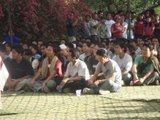
Grand reception of detained Kuki students at JNU for more than 72 hrs at Tihar Jail. the national capital by Delhi Police.The students were holding a peacefull rally against the arrest of 400 kukis by UNLF near Indo-burma border
SIMSAHEI PAHNA ZOUGAM NOM

AW! PENNA THINGLHANG GAMNOUM

HAVE MERCY ON US! O MOTHER INDIA!!

UNITY IN DIVERSITY

ARE WE THE LOST TRIBE OF ISREAL??

The Kuki National Flag with a David Star
KUKI ARMED MOVEMENT
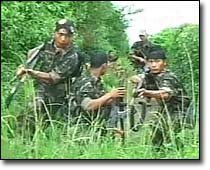
"result of india's ignorance for acknowledging the Kuki indigeneous space"

KUKI BEAUTY ON THE RAMP
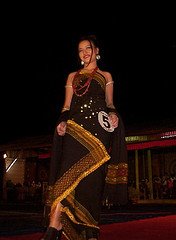
Miss Kut
HEAR OUR CRIES !!!! MR.SMS! (SARDAR MANMOHAN SINGH)
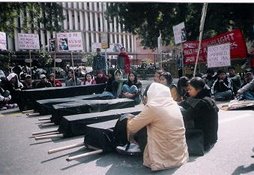
The KSOD COFFIN RALLY
DO INDIA LOVE COMMUNALISM???
Injured Kuki students at RML hospital,brutually lathicharged by Delhi Poice
A NEW HOPE, A NEW DREAM FOR THE KUKIS

WE WANT REFERENDUM!!!!!!!!

MARCHING TO THE CALL OF NATION

MOL LE LHANG SANG JONG NAMPI THUPEH JUI LOU THEI KAHI POUVE

DO THE KUKIS HAVE FAITH ON THE INDIAN DEMOCRACY?


WE WANT JUSTICE AT ANY COST

YOUTH OF THE NATION
